
Gamified popups are interactive website overlays that turn a passive opt-in into a participation moment. Most marketers never get past the novelty.
I’ve worked with enough e-commerce stores and SaaS teams to know how this plays out. You add a spin wheel. Signups spike. You celebrate. Then, 90 days later, revenue hasn’t moved, and your email list is full of fake addresses chasing a 5% coupon.
That’s not a gamified popup problem. That’s an execution problem.
When done right, a gamified popup isn’t just a spin wheel or a scratch card. It’s a conversion system that turns hesitant, anonymous visitors into engaged leads who actually buy. This guide shows you exactly how to make that happen.
What Is a Gamified Popup and Do They Work?
The psychology here is straightforward. Interactivity triggers dopamine. The anticipation of a reward, whether guaranteed or chance-based, keeps people engaged long enough to convert. That brief moment of participation reduces the psychological resistance most visitors feel toward traditional popups.
Gamified popups are used most commonly for email capture, discount delivery, lead generation, cart abandonment recovery, and seasonal promotions.
Why Visitors Respond to Gamified Popups:
- The near-miss effect keeps people engaged even when they don’t win the top prize. A spin wheel that lands just short of “50% off” and gives “15% off” still feels like a win because the person participated. This is the same mechanic used in slot machines, and it’s remarkably effective.
- Variable reward schedules are more compelling than guaranteed ones. When visitors know they will always get 10% off, there’s no excitement. When they know they might get free shipping, 15% off, or a free product, participation feels worthwhile even before they know the outcome.
- Choice increases commitment. Pick-a-gift formats, where the visitor selects which gift to open, tap into the endowment effect. Once someone has made a choice, they are far more likely to follow through and claim the reward.
- Progress momentum works in quiz-based popups. Once a visitor answers the first question, answering the second feels natural. By the time they’ve answered three questions and the popup offers them a personalized recommendation plus a discount, the conversion feels earned rather than forced.
6 Types of Gamified Popups (With Examples That Actually Convert)
Not all gamified popups are built the same, and picking the wrong format for your audience is one of the fastest ways to burn through impressions without results.
After working across dozens of e-commerce and SaaS campaigns, I’ve seen each of these formats win big in the right context and fall flat in the wrong one. Here is what each type does, why it works, and exactly when to use it.
1. Spin the Wheel Popup: The High-Volume Email Capture Engine
A spin-to-win popup shows a rotating wheel divided into prize segments. The visitor enters their email, spins, and wins whatever segment the wheel lands on.

Why it works:
- The mechanic is universally understood, so participation friction is close to zero
- The reward is instant, which satisfies the dopamine loop immediately
- Variable prizes keep the experience exciting even for repeat visitors
Common prizes to include:
- Percentage discounts (tiered across wheel segments)
- Free shipping
- A free product
- Entry into a larger giveaway
The mistake I see most often here is calibrating the reward pool badly. If “50% off” has a 25% probability, you are destroying your margins. The smarter approach is what I call “middle-tier dominance”: make your most sustainable offer, something like free shipping or 10-15% off, the most probable outcome. Keep the headline prize rare enough to maintain excitement but achievable enough to feel credible.
Best for: Welcome offers for new visitors, seasonal promotions, flash sale launches, and high-traffic product pages.
2. Pick-a-Gift Popup: The Curiosity-Driven Lead Capture
Pick-a-gift popups display several wrapped or hidden gifts on screen. The visitor chooses one, enters their email to reveal the contents, and receives whatever reward is inside. Every option contains a genuine reward, so there is no risk of disappointment on the visitor’s end.

Why it works:
- Curiosity pulls visitors in before they have time to think about closing the popup
- The act of choosing creates the illusion of control, which reduces resistance to sharing contact information
- No “losing” outcome means the experience always ends positively
What makes this format stand out is that it works particularly well for brands that want to avoid the spin wheel’s association with discount-heavy retail. A pick-a-gift popup can feel significantly more premium when designed with clean visuals and thoughtful reward tiers.
Best for: Email capture on landing pages, product launch promotions, and holiday campaigns where multiple reward tiers make business sense.
3. Gamified Quiz Popup: The Personalization and Segmentation Play
A quiz popup asks visitors two to four short questions and then delivers a personalized recommendation or reward based on their answers. It is the only format on this list that captures an email address and tells you exactly what the lead is interested in at the same time.
Why it works:
- Progress momentum keeps visitors engaged once they start answering
- Personalized recommendations feel earned, not forced
- Responses give you zero-party data you can use for segmented email follow-ups
A real example of how this plays out: A skincare brand can ask “What is your skin type?” and “What is your main concern?” and then recommend specific products alongside a relevant discount code. The visitor gets genuinely useful guidance. You get a lead with clear purchase intent signals already attached.
For premium brands, quiz popups also solve the brand dilution problem that comes with spin wheels. A well-designed quiz feels sophisticated, not carnival-like.
Best for: Product recommendation funnels, audience segmentation, SaaS lead qualification, and any brand where a spin wheel would feel off-brand.
4. Giveaway Popup: The List Builder for Launch Moments
A giveaway popup offers visitors a clear, high-value prize in exchange for their email address and, sometimes, a social share or referral action. The prize creates instant attention, and the low perceived effort of “just entering” removes conversion resistance almost entirely.
Why it works:
- Low effort plus high reward is one of the most compelling psychological combinations in marketing
- Social sharing components extend your reach organically without additional ad spend
- The entry mechanic feels inclusive, which keeps participation rates high
The one thing that separates a quality list builder from a deal-hunter magnet is prize alignment. If you sell coffee equipment and you give away a MacBook Pro, you will collect thousands of emails from people who have zero interest in your products. If you give away a high-end espresso machine, every person who enters is a potential customer.
Best for: Website launches, seasonal list-building campaigns, and product launches where you want rapid awareness alongside lead capture.
5. Referral Gamification Popup: The Organic Growth Lever
A gamified referral popup offers visitors a reward in exchange for referring friends, but goes further by adding game mechanics like milestones, leaderboards, or progress bars that make the referral process feel like a competition rather than a chore.
Why it works:
- Progress arcs create commitment: visitors who have made one referral feel motivated to reach the milestone
- Leaderboard mechanics tap into social competition, especially in community-driven brands
- Milestone rewards feel earned rather than given away, which improves perceived value
The difference is in the framing. “Refer 3 friends to unlock 20% off” is more compelling than “Share with a friend for 10% off” because it creates a progress arc. Visitors who have referred one person feel motivated to reach the milestone rather than abandoning mid-funnel.
Community discussions consistently highlight that leaderboard mechanics work particularly well for brands with natural communities: subscription boxes, book clubs, fitness brands, and any product where customers already talk to others like them.
Best for: Post-purchase flows, community-driven brands, and subscription products with strong word-of-mouth potential.
What Are The Biggest Gamified Popup Mistakes (And How to Fix Them)?
Even though gamified popups can drive strong results, most businesses don’t see their full potential because of a few avoidable mistakes. Here’s where things usually go wrong and how you can fix them.
Mistake 1: Firing the Popup the Moment Someone Lands
The single most common complaint in ecommerce forums about gamified popups is that they appear before the visitor has any idea what the site sells. This creates immediate friction and drives bounces. The popup is interrupting discovery rather than responding to hesitation.
Actionable Fix:
- Set exit-intent popups only after 5–10 seconds to avoid instant interruption
- Trigger gamified popups at 40–60% scroll depth on blogs or product pages
- Use different triggers for mobile, where exit-intent behaves differently
- A/B test delay timings weekly and adjust based on bounce rate changes
Mistake 2: Using the Same Popup for Every Visitor
Returning customers who have already used your spin wheel discount do not need to see it again. First-time visitors to a product page have a different intent than someone who just added items to their cart and paused.
Actionable Fix:
- Create at least 3 segments: new visitors, cart users, returning customers
- Use cookies or user behavior to suppress repeat offers
- Show higher-value rewards only to high-intent users (cart or checkout stage)
- Personalize messaging based on page type or traffic source
Mistake 3: Optimizing for Opt-In Rate Instead of Revenue
Opt-in rate is a vanity metric if the people opting in never buy. The metric you should track alongside opt-in rate is coupon redemption rate and repeat purchase behavior from popup-sourced leads.
Actionable Fix:
- Track coupon redemption rate alongside opt-ins in your analytics
- Use smaller but more relevant incentives instead of blanket discounts
- A/B test reward types like percentage vs fixed discounts, and free shipping
- Retarget popup leads with follow-up emails to improve repeat purchases
How Do You Build a High-Converting Gamified Popup?
Building a gamified popup that actually converts is not complicated, but there is a specific sequence that separates high-performing campaigns from ones that collect burner emails and vanish into your CRM with zero revenue to show for it.
Here is the full process, start to finish.
Step 1: Define Your Conversion Goal
Before you touch any template, decide what you are trying to achieve with this specific gamified popup campaign. Your goal determines every other decision: the popup format you pick, the prize structure, the trigger timing, the targeting rules, and the follow-up sequence.
Quick AI Prompt to Choose Your Goal:
“Based on my website type: ________ Traffic source (e.g., organic, ads, social): ________ Current challenge (low conversions, cart abandonment, low engagement): ________ What should be the primary goal of my gamified popup and what format (spin wheel, quiz, pick-a-gift, scratch card) would work best for it and why?”
Common goals and how they shape your setup:
| Goal | Best Format | Trigger | Prize Focus |
|---|---|---|---|
| Email list growth | Spin wheel or pick-a-gift | 15-20 second time delay | Mix of low and mid-tier prizes |
| Cart abandonment recovery | Spin wheel | Exit intent on cart/checkout pages | Free shipping or percentage off cart total |
| Lead qualification | Quiz popup | Scroll depth (40-50%) | Personalized product recommendation plus discount |
| Re-engagement of returning visitors | Spin wheel or scratch card | Return visit trigger | Slightly stronger offer with "We saved your reward" angle |
| Seasonal campaign | Any format | Timed to campaign window | Prize segments and visuals aligned to the campaign theme |
Step 2: Build Your Gamified Popup
Open Picreel and create a new campaign. No coding required. Choose your build approach based on how much time you have:
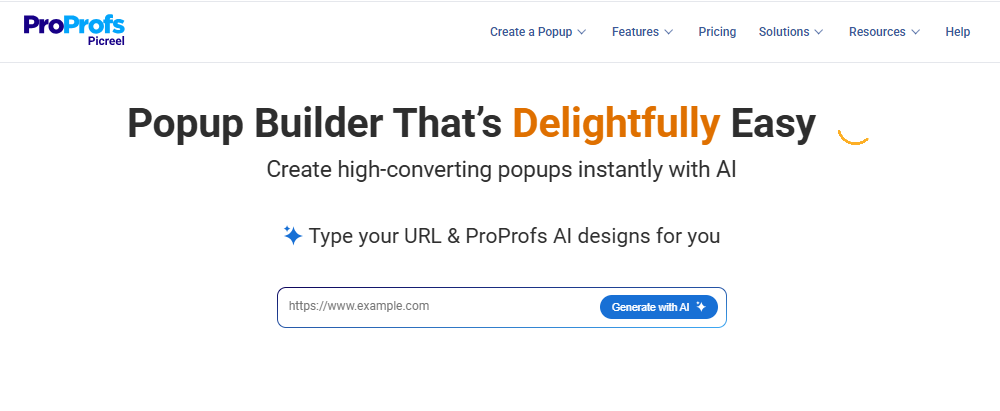
- For speed: Use an AI builder. Enter your website URL and goal, and it generates a gamified popup with layout, copy, and CTA already aligned to your objective.
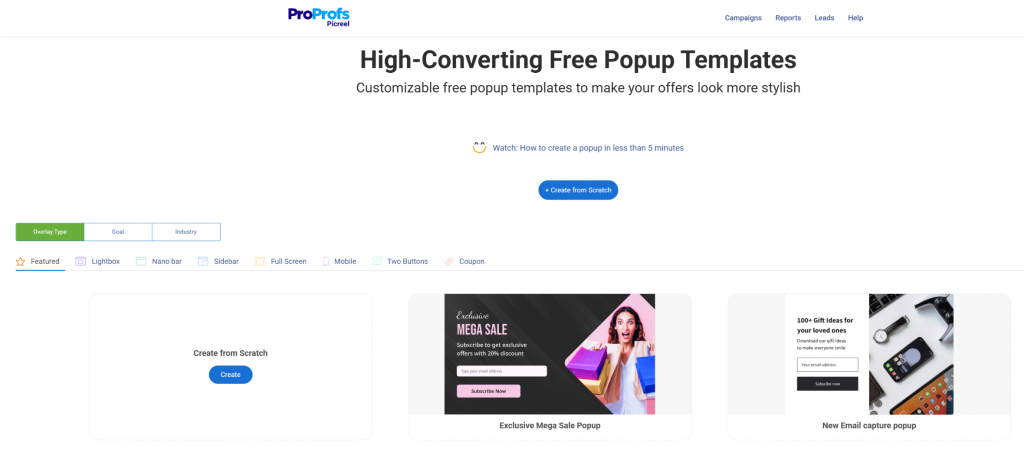
- For more control: Start with a popup template and customize it using the drag-and-drop editor.
Once you are inside the builder, focus on the elements that actually move conversion rates:
- Ask for email only on first touch. Extra fields reduce opt-ins significantly
- Write a benefit-driven headline. “Spin to unlock your exclusive deal” outperforms generic copy every time
- Use action-oriented CTAs like “Spin Now,” “Pick Your Gift,” or “Start the Quiz”
- Show the reward clearly if you are offering a lead magnet or content unlock
- For quiz popups, lead with a low-effort first question to build momentum before asking for the email
Headline Writing Prompt: “My visitor is on [this page] and cares about [problem]. The reward I am offering is [offer]. Write 3 benefit-driven, curiosity-based headlines for a gamified popup.”
Customization tips that separate average popups from high-converting ones:
- Colors: Match your brand palette. A generic wheel or gift box design signals low trust
- Fonts: Keep typography consistent with your site
- Prize or reward labels: Short, clear, benefit-focused
- Segments (for spin wheels): Use 5 to 8. Too few feels hollow. Too many looks cluttered on mobile
- Copy style: Build anticipation, not explanation. The visitor should feel excited before they act
If you have EU visitors, enable GDPR consent, link your privacy policy, and keep the consent checkbox unchecked by default. This is not optional.
Step 3: Build Your Prize or Reward Structure
How you distribute prizes directly affects your margins, your lead quality, and your long-term conversion rates. This applies to any gamified format with variable rewards.
For spin wheels and scratch cards, use a tiered probability structure:
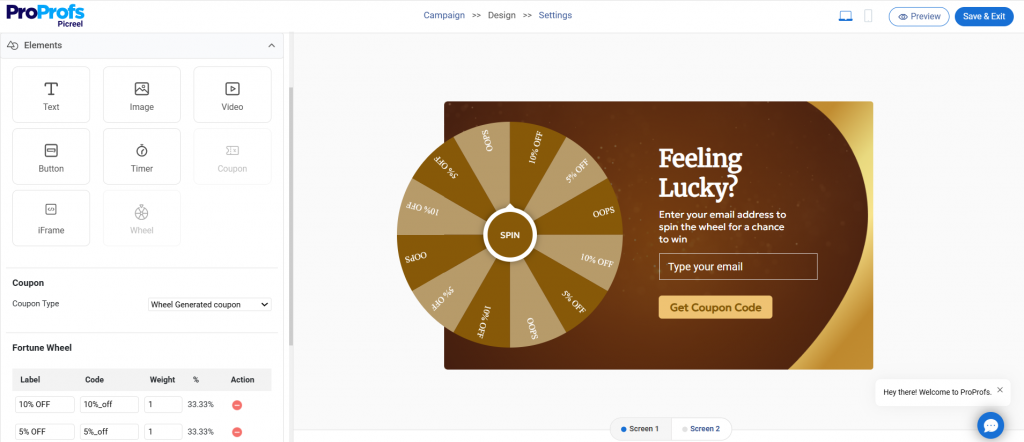
- Low-tier prizes (60-70% probability): Free shipping, 10% off, or a small discount code
- Mid-tier prizes (15-20% probability): 15-20% off or a free product sample
- High-tier prizes (5-10% probability): Large discount, free full-size product, or a bundle
For quiz popups and pick-a-gift formats, map rewards to visitor responses or choices so every outcome feels personally relevant rather than random.
A few non-negotiables for prize configuration:
- Use unique, auto-generated coupon codes for each prize tier. Generic codes like “SPIN10” end up on coupon aggregator sites within hours
- Set coupon expiry to 48-72 hours to create urgency without being punishing
- Never let your highest-value prize have a probability above 10% unless you have the margin to absorb it consistently
Step 4: Set Your Trigger and Targeting Rules
This is the step most marketers rush through, and it is the biggest reason gamified popups get dismissed as annoying rather than helpful. Your trigger logic determines whether the popup feels timely or intrusive.
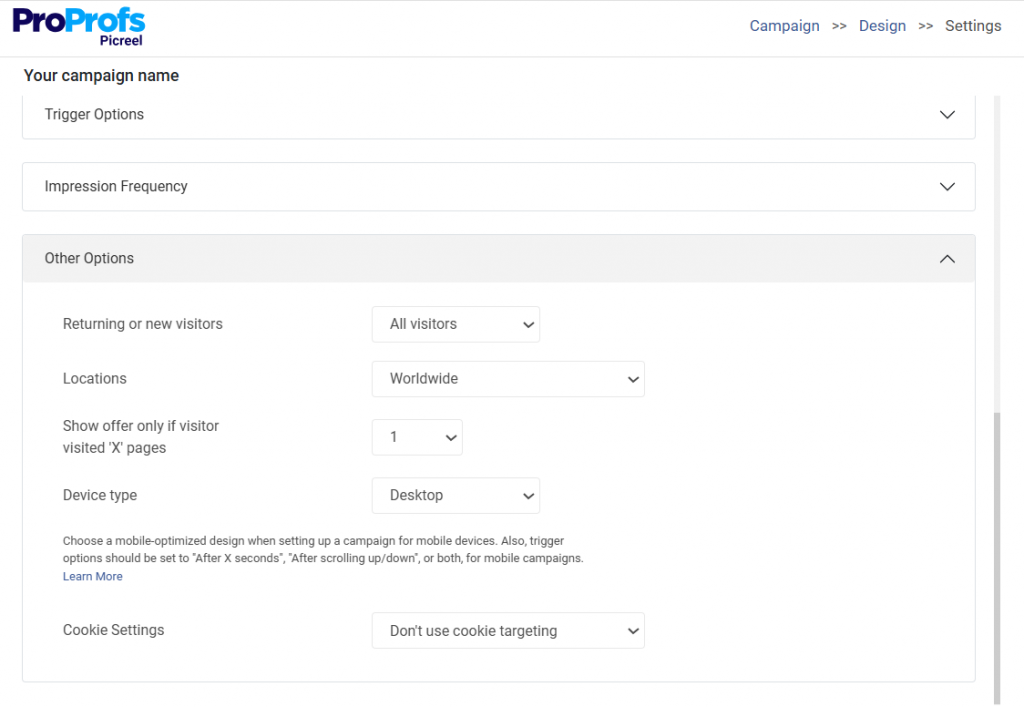
Trigger options and when to use each:
| Trigger | Best Use Case | Recommended Setting |
|---|---|---|
| Exit intent | Cart abandonment, new visitor recovery | Primary trigger for most campaigns |
| Time delay | New visitor email capture | 15-20 seconds after page load |
| Scroll depth | Engaged content or product page readers | 40-60% scroll depth |
| Page-level | Cart or checkout abandonment | Specific URL match on /cart or /checkout |
Targeting rules to configure before launch:
- New vs. returning visitors: Show your standard gamified popup to new visitors. Show a “We saved your reward” version to returning visitors who have not yet converted, with a slightly stronger offer
- Device type: Test mobile and desktop separately. Mobile layouts for spin wheels and pick-a-gift formats often need larger tap targets and vertical alignment
- Traffic source: Visitors from paid ads have different expectations than organic visitors. Consider a stronger prize structure for cold traffic that does not yet know your brand
- Geography: If you do not ship to certain countries, exclude those visitors from the popup. A coupon someone cannot use creates a frustrating experience that damages brand perception
- Frequency cap: Show the popup a maximum of once per visitor per session, and not again for at least 7 days after dismissal
Step 5: Connect Your Email Platform
This is where most campaigns leave serious money on the table. The email address captured through your gamified popup is only as valuable as the follow-up sequence that receives it.

Integration setup inside Picreel:
- Connect to your email platform (HubSpot, Klaviyo, Salesforce, BIGContacts, or others)
- Map the email field to your subscriber list
- Tag new subscribers as “gamified-popup-opt-in” or by specific format (“spin-to-win,” “quiz-lead”) so you can segment and track them separately from other sources
- Pass the prize or reward won as a custom property if your platform supports it, for example “prize_won: free_shipping,” to trigger prize-specific follow-up flows automatically
The follow-up email sequence that actually converts:
- Email 1 (within 60 seconds of opt-in): Reward or coupon code plus a welcome message, plus a clear CTA to shop or browse now. This email lands while the visitor is still engaged, which is why it consistently outperforms average open rate benchmarks
- Email 2 (Day 2): Best-sellers or product recommendations based on the page the visitor was on when the popup appeared
- Email 3 (Day 4): Social proof, customer reviews, or a brand story to build trust with leads who have not yet purchased
- Email 4 (Day 7, if no purchase): Coupon reminder with a countdown to expiry and a low-friction CTA
Step 6: Run an A/B Test Before Committing
Do not permanently replace your current lead capture approach with a gamified popup based on an assumption. A/B test both simultaneously for at least 30 days before making a final call.
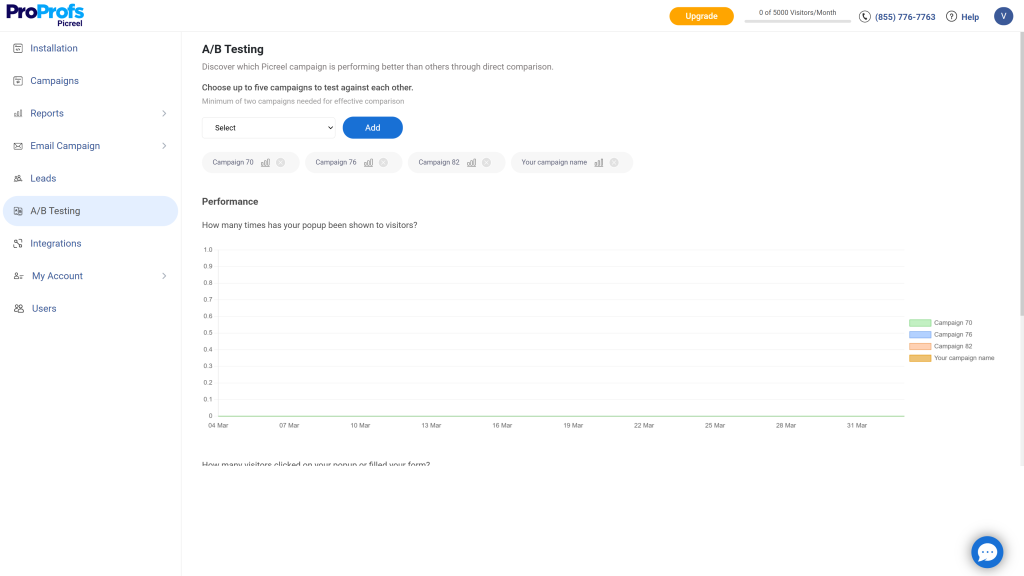
Metrics to track during your test:
- Email capture rate: Opt-ins divided by popup views
- Coupon or reward redemption rate: Codes used divided by codes issued
- Revenue per subscriber: Revenue attributed to popup opt-ins divided by total subscribers from that source
- List quality at 90 days: Open rate and click rate of your welcome sequence from popup-sourced leads
Let the data make the decision for you. In most B2C ecommerce contexts, gamified popups outperform static ones. In luxury, B2B, or professional services, a well-designed static popup often performs comparably because brand perception carries more weight than the novelty of a game mechanic. Know your context before scaling.
FREE. All Features. FOREVER!
Try our Forever FREE account with all premium features!
Gamified Popups vs. Static Popups: What the Numbers Actually Show
| Metric | Static Popup | Gamified Popup |
|---|---|---|
| Average conversion rate | 1-3% | 5-10% (up to 17% in optimized campaigns) |
| Email quality | Mixed | Higher when reward is product-relevant |
| Brand perception | Neutral to negative | Positive when designed well |
| Best use case | Low-friction announcements | Email capture, lead gen, cart recovery |
| Mobile performance | Varies | Strong with tap-optimized formats |
| Fatigue risk | Medium | Higher (requires rotation and refresh) |
Who Should Use Gamified Popups?
Gamified popups aren’t just for one type of business. When used strategically, they can fit into different models depending on the goal, audience, and type of interaction you want to drive.
| Audience | How They Use Gamified Popups | Why It Works |
|---|---|---|
| E-commerce stores | Cart abandonment recovery, welcome discounts, spin-to-win offers | Converts existing traffic, offsets ad costs, and improves low conversion rates |
| SaaS companies | Quiz-based popups for lead segmentation (use case, company size, goals) | Enables personalized follow-ups instead of generic email sequences |
| Publishers and content sites | Giveaways, quizzes for email capture | Scales list building quickly from high organic traffic |
| Service businesses and agencies | Interactive quizzes for lead capture and qualification | Stands out as a novelty and pre-qualifies leads before outreach |
Turn More Visitors Into Buyers With Smarter Gamified Popups
Gamified popups work when they are treated as a system, not a gimmick. The difference comes down to timing, targeting, and reward strategy. When done right, they turn passive traffic into engaged users, improve email capture quality, and drive actual revenue, not just signups. The biggest takeaway is simple. Focus on intent, segment your audience, and optimize for the full funnel, not vanity metrics.
This is where Picreel makes a real difference. It gives you advanced targeting, easy multi-site deployment, and deep integrations without needing technical effort. You can test, personalize, and scale campaigns from one place while tracking real business impact.
Your next step is to launch one high-intent campaign. Start with an exit-intent gamified popup on your top traffic page and measure conversions, not clicks.
Frequently Asked Questions

When should you avoid using gamified popups altogether?
Avoid them if your audience expects a highly formal or serious experience like legal or healthcare services. Also skip them if your traffic is very low, since you will not have enough data to optimize performance.
How do gamified popups perform across different industries beyond ecommerce and SaaS?
They work well in industries with clear user intent and measurable actions like education, fitness, and subscriptions. In industries where decisions are slow or high risk, results are usually slower and depend more on personalization.
What is the ideal balance between rewards and profit margins for sustainable campaigns?
Focus on mid-tier rewards like free shipping or small discounts. These keep engagement high without hurting margins. High-value rewards should be rare so they create excitement without becoming your default cost.
How do gamified popups affect brand trust over time, especially for premium brands?
They can build trust if designed cleanly and aligned with your brand. Poor design or aggressive discounts can make your brand feel cheap. Format choice like quizzes or curated rewards helps maintain a premium feel.
What are the best ways to prevent fake or low-quality email signups at scale?
Use email verification before showing the reward. Offer product-related incentives instead of generic discounts. Limit one reward per user and use expiring codes to discourage people from gaming the system.
How do gamified popups integrate with broader CRO and marketing strategies beyond email capture?
They feed into your email flows, retargeting campaigns, and personalization strategies. The data collected helps segment users so you can send more relevant offers and improve conversion rates across the funnel.
What is the impact of gamified popups on mobile user experience in low-bandwidth environments?
Heavy designs can slow down loading and hurt the experience. Keep popups lightweight, use simple animations, and ensure fast load times. A slow mobile popup can increase bounce rates rather than conversions.
How do you scale gamified popup campaigns across multiple websites or domains efficiently?
Use a single platform that supports multi-site deployment. Create templates that can be reused and customized. Centralize reporting to track performance across sites without managing each site separately.
What internal team or resources are required to manage and optimize these campaigns continuously?
You need someone for strategy, someone for design, and someone to track performance. In smaller teams, one person can handle all three using templates and analytics tools to keep things efficient.
FREE. All Features. FOREVER!
Try our Forever FREE account with all premium features!

 We'd love your feedback!
What did you like & how can we make it even better?
 Thanks for your feedback!
 Ask Your Question
Have a question? Get expert help to make your decision easier.