

If you’re here, you’ve probably already hit HelloBar’s ceiling. Maybe it’s the 5,000 monthly pageview cap on the free plan, the pricing jump when you need more, or the fact that it just doesn’t do enough for the effort you’re putting in.
I’ve tested and researched popup tools extensively, and what’s clear is this: the lead generation market has grown well past what HelloBar offers.
Whether you’re a growth marketer at a SaaS startup, an ecommerce brand fighting cart abandonment, or an agency managing multiple client sites, there’s a more capable, more cost-effective tool out there for your specific use case.
This guide breaks down the 10 best HelloBar alternatives with honest pros, cons, pricing, and a clear “best for” tag so you can pick the right one without spending hours on trials.
Why Growth Marketers Are Switching From HelloBar
Before jumping into the list, it’s worth knowing what’s actually driving people away. The community research I pulled from Reddit and Quora surfaced the same complaints repeatedly:
- Pricing model that doesn’t match value at scale, especially for small businesses
- 5,000 lifetime views cap on the free plan, which is genuinely restrictive for anyone with real traffic
- Limited trigger options compared to what’s available elsewhere in the same price range
- No gamification features like spin-to-win or scratch cards, which are proven ecommerce converters
- Domain/site restrictions that frustrate agencies and anyone running more than a few properties
- Design limitations that make popups look dated compared to what modern tools offer
- Weak analytics at lower tiers, making optimization guesswork
10 Best HelloBar Alternatives for Lead Generation
Before we dive into the detailed reviews, I find it helpful to compare the top HelloBar alternatives side by side.
The table below gives a quick snapshot of who each tool is best for, how users rate it, and what you can expect to pay.
Once you’ve narrowed down your shortlist, you can jump into the detailed breakdowns that follow.
| Tool | Best For | User Rating | Price |
| Picreel | Converting Existing Traffic Into Leads and Sales | 4.5/5 | Free plan available; paid plans start at $9.99/month |
| OptinMonster | Advanced Behavioral Targeting | 4.2/5 | Starts at $9/month |
| Thrive Leads | Maximizing Lead Generation on WordPress | 5.0/5 | Starts at $299/year |
| Sleeknote | Non-Intrusive Popups That Match Your Brand | 4.8/5 | Starts at €49/month |
| OptiMonk | E-commerce Conversion Optimization | 4.9/5 | Starts at $19/month (billed annually) |
| Sumo (BDOW) | Email List Building With Minimal Setup | 4.2/5 | Starts at $19/month (billed annually) |
| Icegram | WordPress Users on a Budget | N/A | Starts at $129/year |
| Wisepops | E-commerce Brands That Prioritize Design Quality | 4.9/5 | Starts at €499/month |
| Getsitecontrol | Budget-Conscious Teams Needing Smart Triggers | 4.7/5 | Starts at $19/month |
| Unbounce | Teams Combining Landing Pages and Popups | 4.5/5 | Starts at $22/month (billed annually) |
1. Picreel – Best for Converting Existing Traffic Into Leads and Sales
Picreel is my top overall HelloBar alternative pick in this list because it’s built specifically around the moment that matters most: when a visitor is about to leave without converting. The Exit Intent Triggers detect that behavioral signal on both desktop (cursor movement toward the browser tab) and mobile (scroll-up behavior) and fire a targeted popup before the visitor disappears.
What I find compelling is that you’re not just adding a popup layer to your site, you’re adding a conversion layer that works across the entire visit lifecycle. The AI Popup Builder lets you enter your URL and generate a campaign in under 15 minutes. You can try it out here:
Beyond campaign creation, AI can automatically apply your brand colors and fonts, edit popup elements using plain-language prompts, and summarize campaign reports with actionable insights.
For anyone who doesn’t want to start from a blank canvas, it’s a significant time saver. You can also pick from 100+ ready-to-use templates and launch exit popups, nanobars, full-screen overlays, Wheel of Fortune campaigns, video popups, 2-step overlays, and more.
Advanced Targeting gives you segmentation by location, referral source, device type, and new vs. returning visitor status, so you’re not blasting the same message to everyone.
Pros:
- AI Popup Builder generates live campaigns from your URL in under 15 minutes
- AI automatically applies your branding, including logos, colors, and fonts, to create on-brand campaigns.
- AI-powered editing lets you update copy, design elements, and CTAs using simple text prompts.
- Exit Intent Triggers and Smart Popup Triggers cover desktop and mobile behavioral signals
- Advanced Targeting handles geo, referral source, device, and new vs. returning visitor segmentation
- A/B Testing with Real-Time Analytics lets you identify your highest-converting variation fast
- Native integration with Klaviyo, Mailchimp, HubSpot, Salesforce, and 700+ tools
- AI Report Summaries highlight performance trends and optimization opportunities automatically.
Cons:
- Cloud-only; no on-premise or downloadable version
- No dark mode in the editor
How Picreel Compares With HelloBar: Picreel gives you exit intent, UTM tracking, and advanced targeting without hiding them behind a premium tier. HelloBar’s free plan caps at 5,000 page views and 10 popups; Picreel’s forever-free plan has no lifetime view ceiling and includes real behavioral triggers. For multi-site users or anyone on Klaviyo, Picreel is the stronger fit at a fraction of the cost.
User Rating: 4.5/5 (Capterra)
Price: Forever-free plan for up to 5K visitors. Paid plans start at $9.99/month.
2. OptinMonster – Best for Advanced Behavioral Targeting
I’ve recommended OptinMonster to clients who need deep behavioral targeting and are willing to pay for it. The template library is massive and covers overlays, top/bottom bars, content lockers, and floating bars. What genuinely stands out is the AdBlock detection technology, which politely asks visitors to safelist your site instead of just losing them to the blocker.
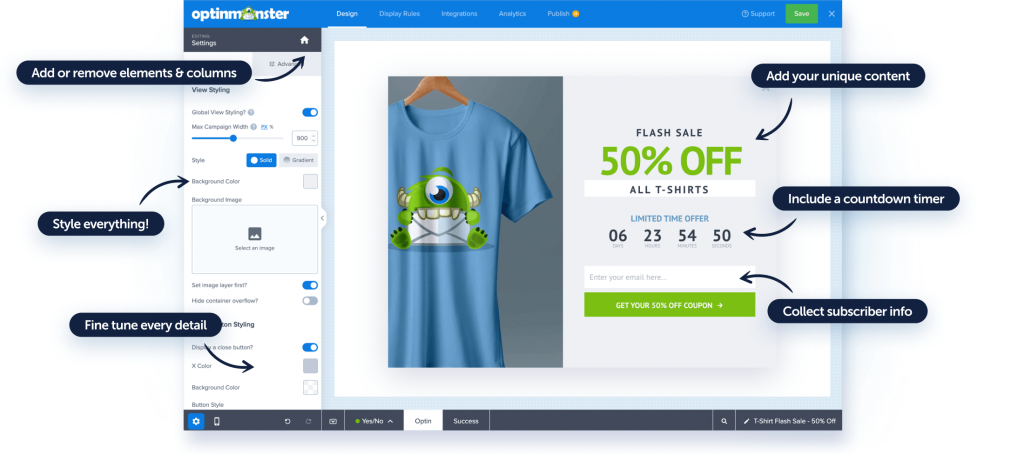
The targeting rules go further than most tools on this list, including page-level, category-level, and audience-level segmentation that lets you get precise about who sees what and when. That said, the pricing structure is where most people hit frustration. Exit intent, UTM tracking, and Klaviyo integration are all locked behind the Pro plan.
For small businesses, the jump from the basic plan to the tier where OptinMonster actually gets useful is steep, and it’s worth mapping your required features against each pricing tier before you sign up.
Pros:
- 100+ customizable templates for popups, bars, and content lockers to launch campaigns faster.
- AdBlock detection encourages visitors to safelist your site instead of losing them to blockers.
- Advanced targeting lets you control who sees each popup based on page, audience, and behavior.
- Built-in A/B testing and analytics help optimize conversions with data-backed insights.
- Integrates with Klaviyo, HubSpot, and other leading email platforms for seamless lead management.
Cons:
- Core features like exit intent locked behind Pro plan ($89.99/month)
- Base plan restricts to limited domains, problematic for agencies
- Script can slow down page load times and affect Core Web Vitals
How OptinMonster Compares With HelloBar: OptinMonster has more trigger types and deeper targeting rules than HelloBar, but you pay significantly more to access them. HelloBar is simpler and cheaper; OptinMonster is for teams that have outgrown basic popup tools and need behavioral precision.
User Rating: 4.2/5(Capterra)
Price: Starts at $9/month
3. Thrive Leads – Best for Maximizing Lead Generation on WordPress
A WordPress developer I work with introduced me to Thrive Leads after I complained about a bloated plugin slowing down client sites. Once I got inside, the reporting depth alone justified the switch. I could see conversion rates, impressions, and list growth broken down per form, per group, and per campaign, a level of granularity I had not found anywhere else at this price point.
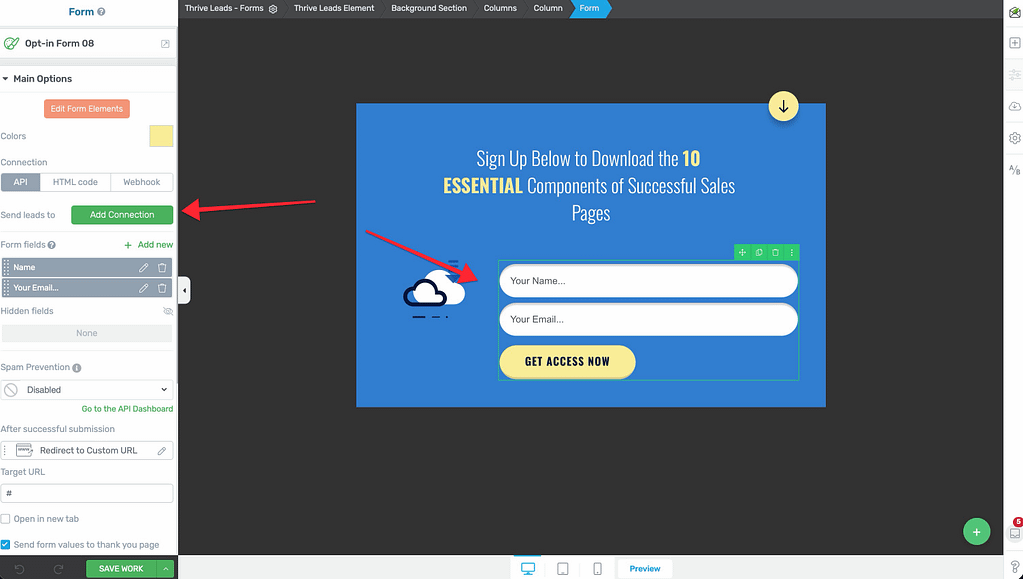
What genuinely surprised me was the subscriber-aware targeting, which lets you show completely different popups to people already on your list and solves one of email marketing’s most persistent blind spots. For WordPress users, the one-time yearly cost makes far more financial sense than stacking monthly SaaS fees.
Pros:
- Unlimited A/B testing lets you optimize headlines, CTAs, colors, and more without restrictions.
- Smart targeting hides opt-in forms from existing subscribers to avoid repetitive experiences.
- Content Locking gates premium content behind a signup form to grow your email list.
- Asset Delivery automatically sends lead magnets to new subscribers after signup.
- Fast-loading, mobile-responsive forms ensure a smooth experience across all devices.
Cons:
- The reporting system can be slow and buggy at scale
- Some templates look dated compared to newer tools
How Thrive Leads Compares With HelloBar: Thrive Leads wins on A/B testing depth and smart subscriber targeting. HelloBar has a simpler setup, but Thrive Leads is a one-time yearly purchase that makes far more financial sense for WordPress users who do not want monthly SaaS fees adding up.
User Rating: 5/5 (Based on 2 Capterra reviews)
Price: Starts at $299/year
4. Sleeknote – Best for Non-Intrusive Popups That Match Your Brand
I came across Sleeknote through a CRO forum where practitioners working with high-traffic ecommerce sites kept recommending it, and their common thread was that it doesn’t feel like a traditional popup tool: it feels like a native part of the site.
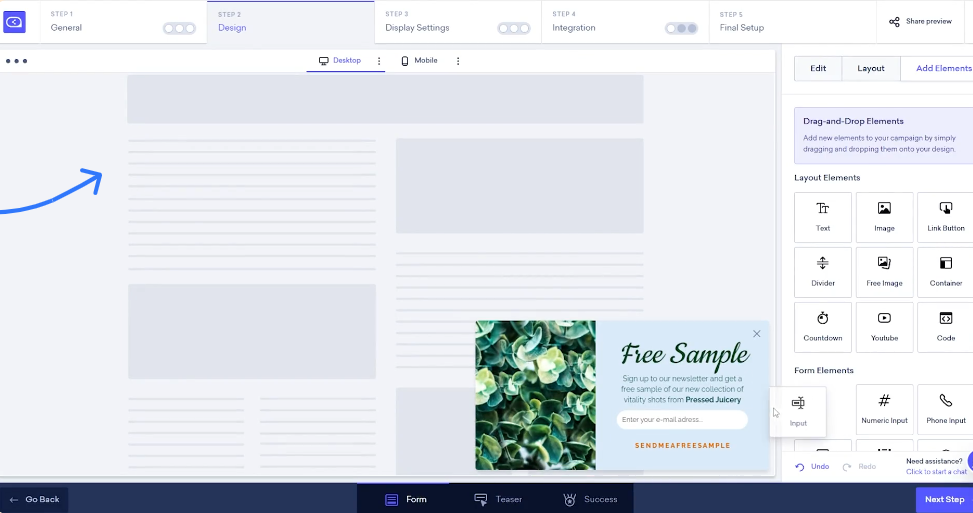
That’s intentional, because Sleeknote defaults toward slide-ins and embedded forms rather than full-screen takeovers, and the drag-and-drop editor makes building those feel effortless. What impressed me most was the dedicated mobile editor, which treats mobile as a first-class design experience rather than a resized version of the desktop campaign.
That approach shows clearly in how campaigns actually perform. For larger teams, the real-time analytics deliver the reporting depth that stakeholders need to justify popup spend. The trade-off is price: at €49/month to start, Sleeknote is firmly mid-market and best suited for brands where user experience is genuinely non-negotiable.
Pros:
- Slide-ins and embedded forms capture leads without disrupting the browsing experience.
- A dedicated mobile editor helps you create campaigns optimized specifically for mobile users.
- Advanced triggers based on scroll depth, time on page, and visitor behavior improve targeting.
- Real-time analytics provide detailed insights into campaign performance and conversions.
- Integrates with HubSpot, Campaign Monitor, Drip, and other leading marketing platforms
Cons:
- Expensive starting price compared to most alternatives on this list
- Some popup types have reported compatibility issues with certain browsers
How Sleeknote Compares With HelloBar: Sleeknote wins on design quality, brand consistency, and mobile-first thinking. HelloBar is simpler and cheaper, but for brands where user experience and aesthetics are non-negotiable, Sleeknote justifies its premium.
User Rating: 4.8/5 (Capterra)
Price: Starts at €49/month
5. OptiMonk – Best for E-commerce Conversion Optimization
OptiMonk is the preferred choice of many e-commerce businesses I’ve spoken to, and for good reason: its exit intent technology and targeting rules are designed specifically around cart abandonment recovery and product promotion rather than generic lead capture.
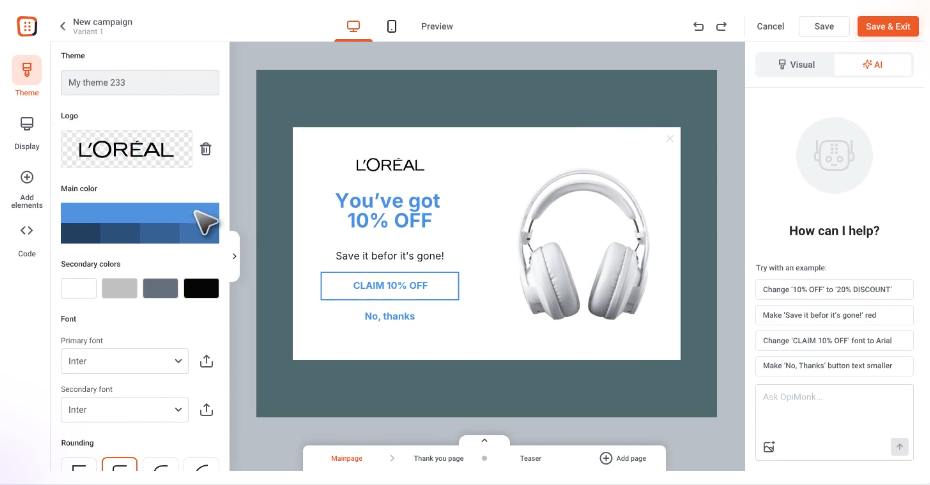
The 200+ template library is built for e-commerce use cases like discount offers, product recommendations, and newsletter signups with incentives attached. What I find genuinely useful is the shopping cart abandonment detection, which fires the right message to the right visitor at exactly the moment they’re about to leave without purchasing.
There’s also a free plan, which makes it accessible for stores starting out. The interface can feel complex at first, and the free plan’s limitations become apparent quickly, but for ecommerce teams running volume-based campaigns where conversion rate improvements translate directly to revenue, OptiMonk gives you the depth to make that work without needing a developer.
Pros:
- 200+ ecommerce templates help you launch discount, product recommendation, and cart recovery campaigns quickly.
- Cart abandonment detection triggers targeted messages before shoppers leave without purchasing.
- Advanced targeting personalizes campaigns based on visitor behavior, cart activity, and browsing history.
- Built-in A/B testing and analytics help maximize conversions and e-commerce revenue.
- Integrates with Shopify, Klaviyo, Mailchimp, and other popular ecommerce tools.
Cons:
- Free plan is limited, not a true substitute for paid features
- Interface can feel complex for first-time users
How OptiMonk Compares With HelloBar: OptiMonk has far deeper ecommerce-specific targeting and a larger template library than HelloBar. HelloBar is simpler; OptiMonk is for stores that need campaign precision around cart abandonment and product-level targeting.
User Rating: 4.9/5 (Capterra)
Price: Starts at $19/month (billed annually)
6. Sumo (BDOW) – Best for Email List Building With Minimal Setup
Sumo was one of the first popup tools I tested, and even after finding more sophisticated options, I still recommend it to a specific type of user: teams that want email list building with minimal setup and zero learning curve.
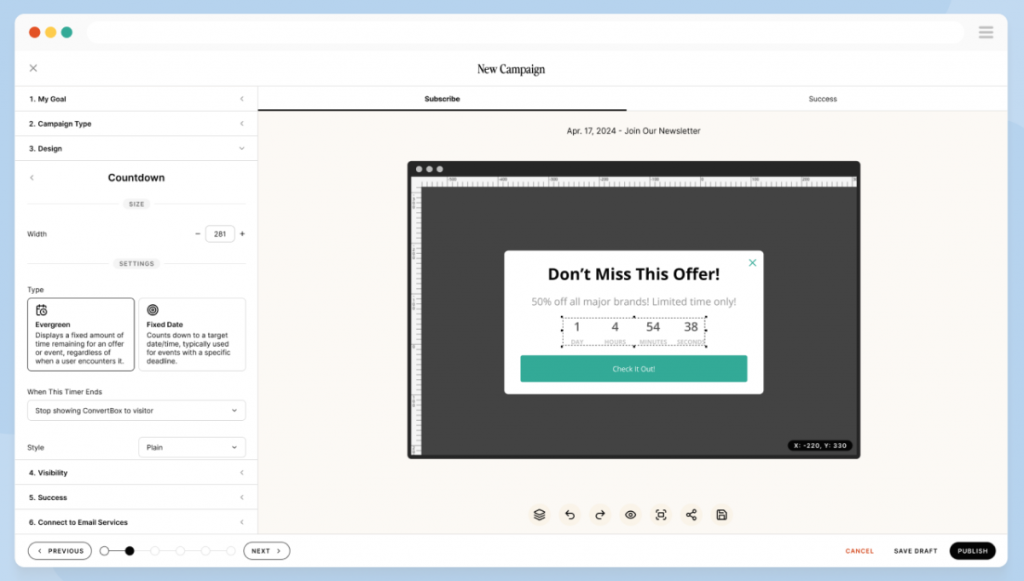
The Mailchimp integration is one of the cleanest I’ve seen at this price point, with leads flowing directly from the popup into your list in real time, without any middleware or Zapier step required. The social sharing features are a genuine differentiator that most popup tools simply don’t offer.
It also works across custom websites and blogs that aren’t tied to major ecommerce platforms, which makes it a practical fit for content creators who want simplicity over sophistication. The free plan is legitimately useful for bloggers just starting out, though the Pro plan pricing becomes harder to justify once you start comparing feature depth against other tools on this list.
Pros:
- One-click WordPress and Google Tag Manager integrations make setup fast and code-free.
- Native Mailchimp integration automatically sends new leads to your email lists in real time.
- Built-in social sharing features help visitors promote your content directly from campaigns.
- A/B testing and analytics provide actionable insights to improve conversion rates.
- A wide range of templates supports different campaign goals beyond traditional popups.
Cons:
- Can slow down page load speed with multiple active popups
- Requires significant configuration to unlock its full potential
How Sumo Compares With HelloBar: Sumo handles basic list building at a lower cost with social sharing features HelloBar doesn’t offer. HelloBar has simpler bar-specific design; Sumo is a better fit for content-focused sites where email capture and social growth are the primary goals.
User Rating: 4.2/5 (Capterra)
Price: Starts at $19/month (billed annually)
7. Icegram – Best for WordPress Users on a Budget
Icegram is a lightweight lead capture and conversion tool that runs as a WordPress plugin, and it’s one I recommend whenever someone tells me they want more than HelloBar gives them but don’t want another monthly SaaS subscription. It covers popups, bars, forms, ribbons, stickies, and badges, and those last three are genuinely unique campaign types you don’t find elsewhere at this price point.
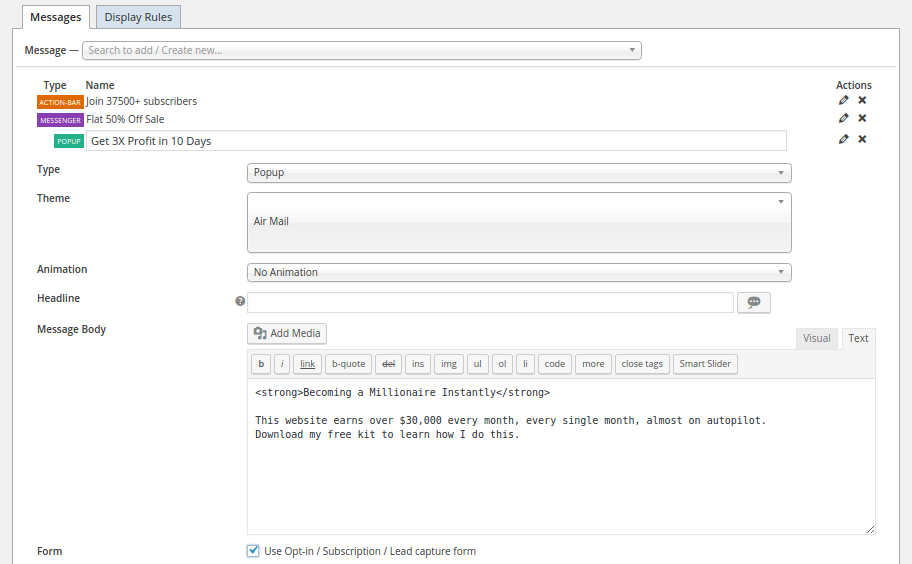
The free version is actually useful, not just a stripped-down preview. The paid plans run on an annual fee structure rather than monthly billing, which makes the total cost of ownership significantly lower for small businesses and bloggers. The design quality is functional rather than polished, which is the honest trade-off for the price.
If you need beautiful, brand-aligned popups, look elsewhere. But if you need reliable targeting, A/B testing, and multiple campaign types on a WordPress site without overpaying, Icegram is a strong call.
Pros:
- Multiple campaign formats, including ribbons, sticky bars, and badges, offer more engagement options than standard popups.
- Geo-targeting and page-level targeting help deliver relevant messages to specific visitor segments.
- Built-in A/B testing and analytics are available on lower-tier plans for easier optimization.
- Annual pricing keeps costs lower than many subscription-based popup tools.
- A functional free plan lets you run real campaigns before upgrading.
Cons:
- Design quality is more functional than polished
- Community-level support rather than dedicated success management
How Icegram Compares With HelloBar: Icegram offers more campaign types and a lower annual cost than HelloBar. HelloBar has a cleaner interface; Icegram wins on variety and price for WordPress users who need more without paying more.
Price: Starts at $129/year
8. Wisepops – Best for E-commerce Brands That Prioritize Design Quality
A brand designer in my network recommends Wisepops to every e-commerce client who cares about how their popups actually look, because cheap-looking campaigns actively undermine brand trust, and most tools in this category don’t take that seriously enough.
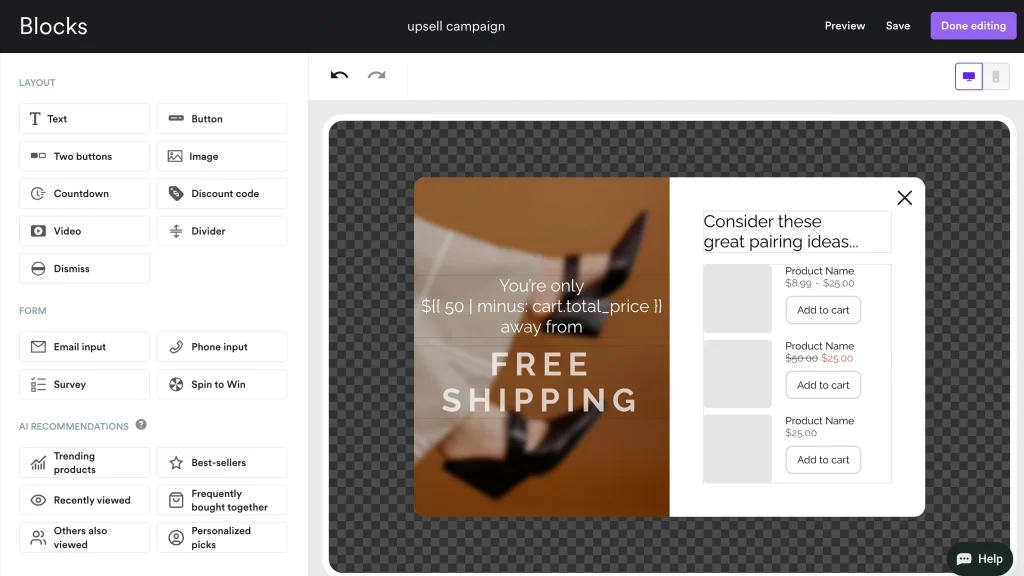
The design quality is noticeably higher than anything else I’ve tested at this level, and the native Klaviyo and Shopify integration is tight enough that segmented email flows connect without friction. It also supports custom website builds beyond Shopify storefronts, making it more flexible than several direct competitors.
Targeting covers browsing behavior, traffic source, and cart status, and custom fields let you capture names, phone numbers, emails, and preferences all within one popup without added complexity. The starting price is higher than most alternatives here, but for DTC brands where a poorly designed popup actively damages trust, the investment returns itself.
Pros:
- Professionally designed, conversion-focused templates help campaigns look polished from day one.
- Native integrations with Klaviyo, Shopify, and Segment streamline lead capture and customer targeting.
- A drag-and-drop builder makes campaign creation simple for non-technical users.
- Built-in A/B testing helps continuously improve conversion performance.
- Advanced targeting uses traffic source, cart status, and visitor behavior to personalize campaigns.
Cons:
- Heavily email-focused; may feel limiting for non-email use cases
- Higher entry price than most alternatives in this list
How Wisepops Compares With HelloBar: For e-commerce specifically, Wisepops gives you better design, tighter Klaviyo integration, and cleaner Shopify compatibility than HelloBar. HelloBar is more affordable; Wisepops is for DTC brands where presentation directly affects conversion trust.
User Rating: 4.9/5 (Capterra)
Price: Starts at €499/month
9. Getsitecontrol – Best for Budget-Conscious Teams Needing Smart Triggers
Getsitecontrol kept popping up as I scrolled through Reddit threads about HelloBar alternatives, especially in communities where pricing was the loudest complaint, and users kept describing it as the tool that does the important things well without charging extra for features that should be standard.
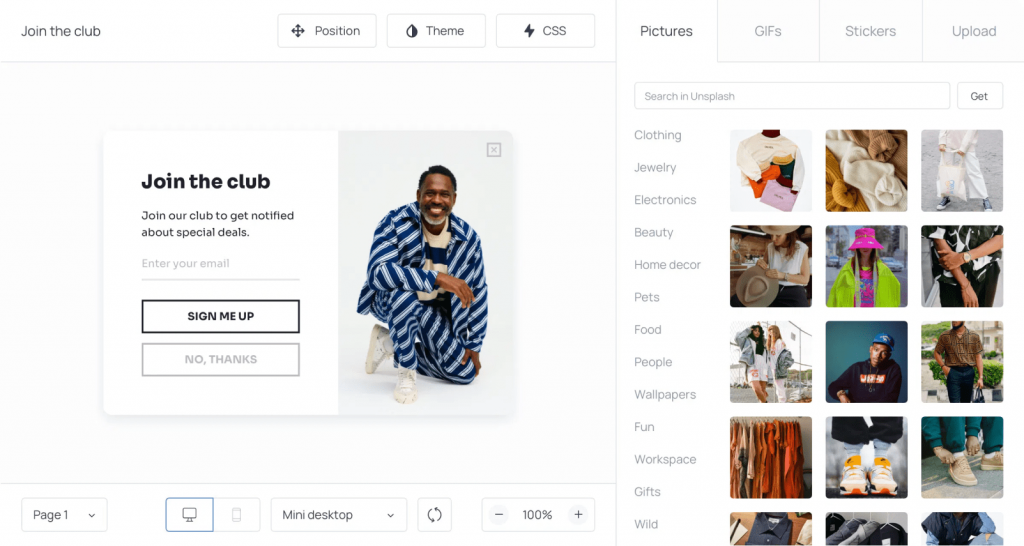
When I tested it myself, I understood immediately why it resonated: full A/B split testing comes with every plan without an upgrade wall. I was impressed by how the display triggers cover time on page, scroll depth, and exit intent across all tiers.
Not just that, you get modals, slide-ins, floating bars, sticky headers, and full-screen overlays, all in one clean dashboard that a solo marketer can figure out and launch from on the same afternoon they sign up. It’s not the most feature-rich tool on this list, but for teams where budget is the primary constraint, the value gap is hard to ignore.
Pros:
- Unlimited A/B testing is available on all plans, making optimization accessible from the start.
- Exit-intent, scroll-based, and time-based triggers help engage visitors at the right moment.
- A diverse template library supports email capture, surveys, promotions, and announcements.
- Multiple campaign formats, including popups, slide-ins, bars, and overlays, are managed from one dashboard.
- Budget-friendly pricing delivers essential popup features without enterprise-level costs.
Cons:
- No onboarding or training resources for new users
- Unlimited widget deployment can create clutter without discipline
How Getsitecontrol Compares With HelloBar: Getsitecontrol covers every core use case HelloBar handles and adds A/B testing on all plans without the view cap. HelloBar is slightly simpler to start; Getsitecontrol is a better long-term value for growing teams.
User Rating: 4.7/5 (Capterra)
Price: Starts at $19/month
10. Unbounce – Best for Teams Combining Landing Pages and Popups
I added Unbounce to this list because most HelloBar users I’ve spoken with aren’t purely looking for a popup tool: they want their popup strategy and landing page strategy living in the same place under the same analytics umbrella, and Unbounce is the strongest answer to that specific need.

Because it started as a landing page builder before expanding into popups and sticky bars, the popup functionality feels genuinely polished rather than bolted on. A/B testing spans both landing pages and popup variants so you can track full-funnel performance in one view. Smart Traffic
AI routes visitors to the best-performing variant automatically, making it the only tool on this list that connects every paid campaign touchpoint end to end. It’s not a direct HelloBar replacement; it’s an upgrade in scope for teams whose campaigns run across paid search, landing pages, and on-site conversion in one connected workflow.
Pros:
- Landing pages, popups, and sticky bars are managed from a single platform for unified campaign tracking.
- Smart Traffic AI automatically directs visitors to the highest-converting variation.
- A/B testing across landing pages and popups provides end-to-end conversion insights.
- Integrates with Salesforce, HubSpot, Mailchimp, and other popular marketing tools.
- 50+ customizable templates help launch proven, conversion-focused campaigns quickly.
Cons:
- Not a standalone popup tool; designed as a complete conversion stack
- Higher price point; overkill if you only need popups
How Unbounce Compares With HelloBar: Unbounce is not a direct replacement: it’s an upgrade in scope. If your campaigns live across paid search and landing pages, Unbounce gives you a more connected view than HelloBar. For pure popup use cases, Picreel or Thrive Leads is a cleaner fit.
User Rating: 4.5/5 (Capterra)
Price: Starts at $22/month (Billed annually)
How I Chose These HelloBar Alternatives
Picking tools for a list like this is not something I take lightly. I followed a systematic approach to make sure every recommendation is fair, grounded, and actually useful for someone making a real purchasing decision.
- User Reviews and Ratings: I started with verified feedback on Capterra, looking for patterns across reviews rather than isolated opinions. If multiple users flagged the same limitation or praised the same feature consistently, that shaped the assessment.
- Essential Features and Functionality: I focused on what actually drives conversion performance: trigger types, targeting depth, template quality, mobile support, and whether the tool delivers on the use case it claims to handle. A tool that lists exit intent as a feature but only supports basic desktop mouse-out detection did not rank as high, regardless of interface polish.
- Ease of Use: If launching your first campaign takes more than 30 minutes, that friction compounds every time you create or adjust a campaign. Tools with clear campaign flows and minimal technical requirements naturally ranked higher. Non-technical marketers should be able to operate the tool independently.
- Customer Support: Plugin conflicts, caching issues, and integration failures are common across popup tools. I looked at support availability, response times cited in reviews, and how well teams assist during setup and troubleshooting, not just after problems arise.
- Value for Money: I evaluated value based on what you realistically get at the pricing tier most businesses would actually use, not just the cheapest entry plan. Free plans and trials were assessed on how useful they are before the upgrade pressure kicks in.
- Personal Experience and Expert Opinions: I factored in firsthand observations and patterns from marketers running real conversion campaigns. If a tool consistently created friction or consistently impressed experienced users, that showed up in the final ranking.
My Top 3 HelloBar Alternatives
After testing all 10 alternatives to HelloBar and comparing them, three consistently came out on top for different reasons. The right one depends on where HelloBar has been letting you down.
1. Picreel
Picreel is my top overall pick because it solves the broadest set of problems HelloBar users run into. The Exit Intent Triggers work on both desktop and mobile, the AI Popup Builder gets you live in under 15 minutes, and Advanced Targeting handles geo, device, referral source, and new vs. returning visitor segmentation without needing a developer. The 700+ native integrations mean you’re not routing leads through Zapier workarounds, and the forever-free plan gives you real features to test before you spend a dollar.
2. Thrive Leads
Thrive Leads earns its place as the top WordPress-specific option because of what it does with A/B testing depth and subscriber-aware targeting. If you’re running a content site, a WooCommerce store, or any WordPress operation where you want to grow a list without showing capture forms to people already on it, Thrive Leads handles that better than anything else I tested at this price point.
3. OptinMonster
OptinMonster is the right pick if advanced behavioral targeting is your primary need and you can justify the Pro plan pricing. The AdBlock detection technology, deep page-level targeting rules, and breadth of trigger types make it genuinely powerful for high-traffic sites running sophisticated lead gen campaigns. Just go in knowing that the features you actually need sit behind the higher tiers.
FREE. All Features. FOREVER!
Try our Forever FREE account with all premium features!
Which HelloBar Alternative Is Right for Your Use Case?
Still unsure which HelloBar alternative fits your needs? Here’s a quick breakdown based on the most common use cases.
| Your Use Case | Best Alternative | Why It Fits |
| Ecommerce brand focused on reducing cart abandonment | Picreel or OptiMonk | Both offer exit-intent technology and ecommerce-focused targeting. Picreel stands out with its AI Popup Builder, 700+ integrations, and strong Shopify/Klaviyo compatibility. |
| Agency managing multiple client websites | Picreel | Supports multi-site deployment and centralized campaign management without restrictive domain limits. |
| WordPress user looking to avoid ongoing SaaS costs | Thrive Leads or Icegram | Thrive Leads excels in A/B testing and subscriber-aware targeting, while Icegram offers a more budget-friendly option. |
| Blogger or content creator focused on growing an email list | Sumo or Getsitecontrol | Both are beginner-friendly, easy to set up, and focused on lead generation without unnecessary complexity. |
| DTC or ecommerce brand that prioritizes design | Wisepops or Sleeknote | Known for polished, high-converting designs and seamless integrations with platforms like Klaviyo. |
| Need landing pages and popups in one platform | Unbounce | Combines landing page creation, popups, sticky bars, analytics, and testing in a single solution. |
| Want the broadest feature set and strongest overall value | Picreel | Combines AI-powered campaign creation, exit intent, advanced targeting, 700+ integrations, analytics, and a feature-rich free plan. |
How to Migrate From HelloBar Without Losing Active Leads
Switching tools mid-campaign is the part most people worry about, and it’s actually easier than it sounds. Here’s the process I’d follow:
- Run both tools in parallel for two weeks: Keep HelloBar active while you rebuild your highest-performing campaigns in your new tool. Don’t switch off until you’ve confirmed the new tool is firing correctly and leads are flowing into your email platform.
- Export your HelloBar lead data first: Pull your captured leads and import them into your CRM or email tool before canceling the account.
- Rebuild your best campaigns first, not all of them: Identify your top two or three campaigns by conversion rate and migrate those. Leave lower-traffic campaigns for later.
- Test trigger behavior on mobile and desktop separately: Exit intent behaves differently across devices. Confirm your new tool fires correctly on both before calling the migration complete.
- Swap the script tag last: For most tools, go-live is as simple as replacing one script tag in your site header. Do this after parallel testing, not before.
Stop Leaving Leads on the Table: The Right HelloBar Alternative Is One Switch Away
If HelloBar is starting to feel limiting, switching may deliver more value than sticking with the status quo. Many alternatives to HelloBar offer stronger targeting, multi-site support, deeper analytics, and native integrations with platforms like Klaviyo, HubSpot, and Shopify without significantly increasing costs.
The biggest lesson from my research is that the best tool depends on your goal. Agencies managing multiple sites, ecommerce brands recovering abandoned carts, and bloggers growing email lists all have different needs. Focus on the solution that aligns with your use case rather than the one with the longest feature list.
If you’re unsure where to start, I’d recommend Picreel. Its plan includes exit intent, behavioral targeting, AI-powered campaign creation, and key integrations, making it easy to launch and evaluate real campaigns before committing.
Set up your first exit intent campaign, connect it to your email platform, and give it two weeks. The conversion data will tell you everything.
Frequently Asked Questions
Which HelloBar alternative works best for Klaviyo users?
Picreel integrates natively with Klaviyo without requiring Zapier as middleware. Wisepops also has a tight Klaviyo integration, particularly for e-commerce brands. If native Klaviyo sync is required, confirm it before committing to any tool, as Zapier-based connections add cost and introduce potential sync delays.
Which HelloBar alternative supports the most websites or domains?
Picreel and Getsitecontrol both support multi-site deployment without restrictive domain caps. WP Notification Bar's unlimited-sites plan is also worth considering if you're on WordPress and want an affordable option.
Do these popup tools affect my Google SEO or Core Web Vitals?
They can, but only if implemented carelessly. Popups that block primary content on mobile or load heavy scripts inline can trigger Google penalties and hurt Core Web Vitals scores. Cloud-hosted tools like Picreel load scripts externally, which avoids adding server load. Always test page speed and mobile experience after installing any popup tool.
Which tool is best if I need a free plan with no lifetime view cap?
Picreel's forever-free plan has no credit card requirement and no lifetime view limit like HelloBar's. Sumo and Icegram also offer free plans worth evaluating before upgrading.
Can I use these tools on Shopify?
Yes. Picreel, Wisepops, OptiMonk, and Sumo all support Shopify directly. Thrive Leads and Icegram are WordPress-specific and won't work on Shopify.
Which HelloBar alternative is best for GDPR compliance?
Most reputable tools on this list support GDPR through geolocation targeting, unchecked consent boxes by default, and cookie suppression rules. Always verify the GDPR feature availability in your chosen tool before targeting EU visitors, as capabilities vary by plan.
FREE. All Features. FOREVER!
Try our Forever FREE account with all premium features!

 We'd love your feedback!
What did you like & how can we make it even better?
 Thanks for your feedback!
 Ask Your Question
Have a question? Get expert help to make your decision easier.