
Most marketers are still running static image popups to capture leads and recover abandoned visitors. They work. But they leave many conversions on the table. The moment you replace or supplement those overlays with video, something shifts.
Visitors stop, watch, and actually engage. According to Wyzowl’s State of Video report in 2026, 85% of people say they have been convinced to buy a product after watching a video.
I have worked with enough e-commerce and SaaS brands to know that video popups, when triggered at the right moment with the right message, consistently outperform static formats across every stage of the funnel.
In this guide, I will walk you through what video popups are, why they convert, the types that work best with real use cases, best practices grounded in real data, and a step-by-step process for building and optimizing them without writing a single line of code.
What Is a Video Popup and How Does It Increase Website Conversion Rates?
Here is why popup video consistently outperforms static formats:
- Build trust faster: Seeing a real person, product demo, or walkthrough makes your message feel more credible and relatable than plain text.
- Match how people prefer to learn: Most visitors would rather watch a quick video than read long descriptions, especially when they are just exploring.
- Simplify complex ideas: A short video can explain what your product does in just a few seconds, making it easier for users to understand and take action.
- Improve conversions across pages: Video naturally holds attention longer, increasing the likelihood that visitors will engage and complete your desired action.
- Feel less intrusive: Unlike static popups that interrupt, video popups invite users to watch, making the interaction feel more voluntary and engaging.
Types of Video Popups and Real Use Cases
Not every popup video serves the same purpose. The format you choose should align with your goal at that stage of the visitor’s journey. Here is a breakdown of the seven types that work best, who they are for, and when to use them:
| Video Popup Type | Best Used For | Trigger to Use | Real Use Case |
|---|---|---|---|
| Product Demo | Visitors evaluating your product on a features or pricing page | Time on page (30+ seconds) | A SaaS company fires a 90-second demo after a visitor spends 30 seconds on pricing. The video walks through one core workflow. Visitor leaves knowing exactly what they are buying. |
| Onboarding Tutorial | New users logging in for the first time | Page URL targeting (dashboard on first login) | A mobile app shows a 60-second orientation popup on the first login session. Completion rate is high because the viewer just signed up and is in learning mode. |
| Exit-Intent Video | Abandoning visitors across product, cart, or pricing pages | Exit intent detection | An ecommerce skincare brand shows a 30-second founder video on exit intent. The founder explains the product story and offers 10% off. Well-crafted exit popups recover 10 to 15% of abandoning visitors (Conversion Sciences). |
| Click-Triggered Video | High-intent visitors on sales or landing pages | Visitor click on thumbnail or play button | A course creator places a thumbnail with a play button overlay on their sales page. Prospects preview a module before enrolling. Because the visitor opted in, the post-video CTA converts at 22%. |
| Limited-Time Offer | Flash sales, Black Friday, seasonal campaigns | Scroll depth (50 to 70%) | A fashion retailer triggers a sale video popup at the 50% scroll mark. A team member explains the offer, shows featured items, and the popup includes a coupon code with a 24-hour countdown. |
| Testimonial and Social Proof | Visitors hesitating on pricing or checkout pages | Time on page (2+ minutes without converting) | A B2B SaaS triggers a 90-second customer story video on the pricing page after two minutes of inactivity. Hearing a peer describe a specific outcome tips the decision where a written quote would not. |
| How-To and FAQ Video | Visitors who are stuck or inactive on complex feature pages | Inactivity trigger (20 seconds of no interaction) | A software company surfaces a how-to popup on a complex setup page after 20 seconds of inactivity, which signals the visitor is confused. A 90-second walkthrough clears the friction and prevents a bounce. |
How to Create a Video Popup With Picreel (Step-by-Step)
You do not need a developer or a video production team to get a video popup live. With Picreel, the full process from setup to launch takes under 30 minutes. Here is exactly how to make a YouTube video popup window.
Step 1: Define Your One Goal
Every video popup should do exactly one thing. Generate a lead. Recover a cart. Promote a webinar. Introduce a product.
The moment you try to do two things, the message gets muddled and your conversion rate drops. Before you open any tool, go to ChatGPT or Gemini and brainstorm using this prompt:
| Goal-setting prompt:“The only action I want this visitor to take after watching this video popup is [specific action]. On a scale of 1 to 10, how likely is a visitor on [this page] to want this? If the answer is below 7, rethink the offer or the page.” |
Start with a score of 7 or higher. Anything less means the page and the offer are not aligned.
Step 2: Choose Your Video Popup Type
Based on the goal from Step 1, match it to the right video popup type using the table in the section above. The combination of popup type and trigger strategy matters more than the design at this stage.
A quick reference:
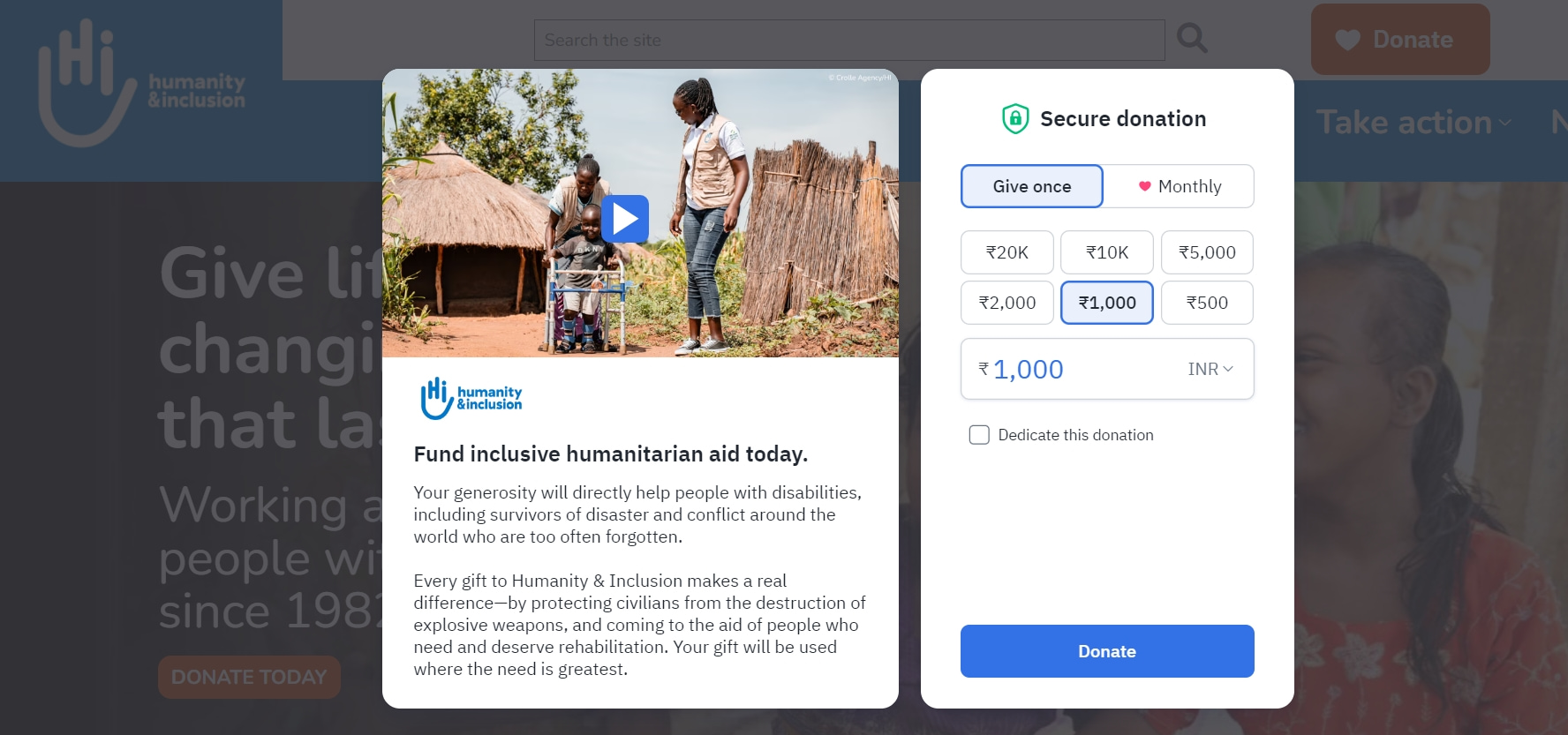
- Cart recovery: exit-intent popup video catches the visitor at the last moment with a human message
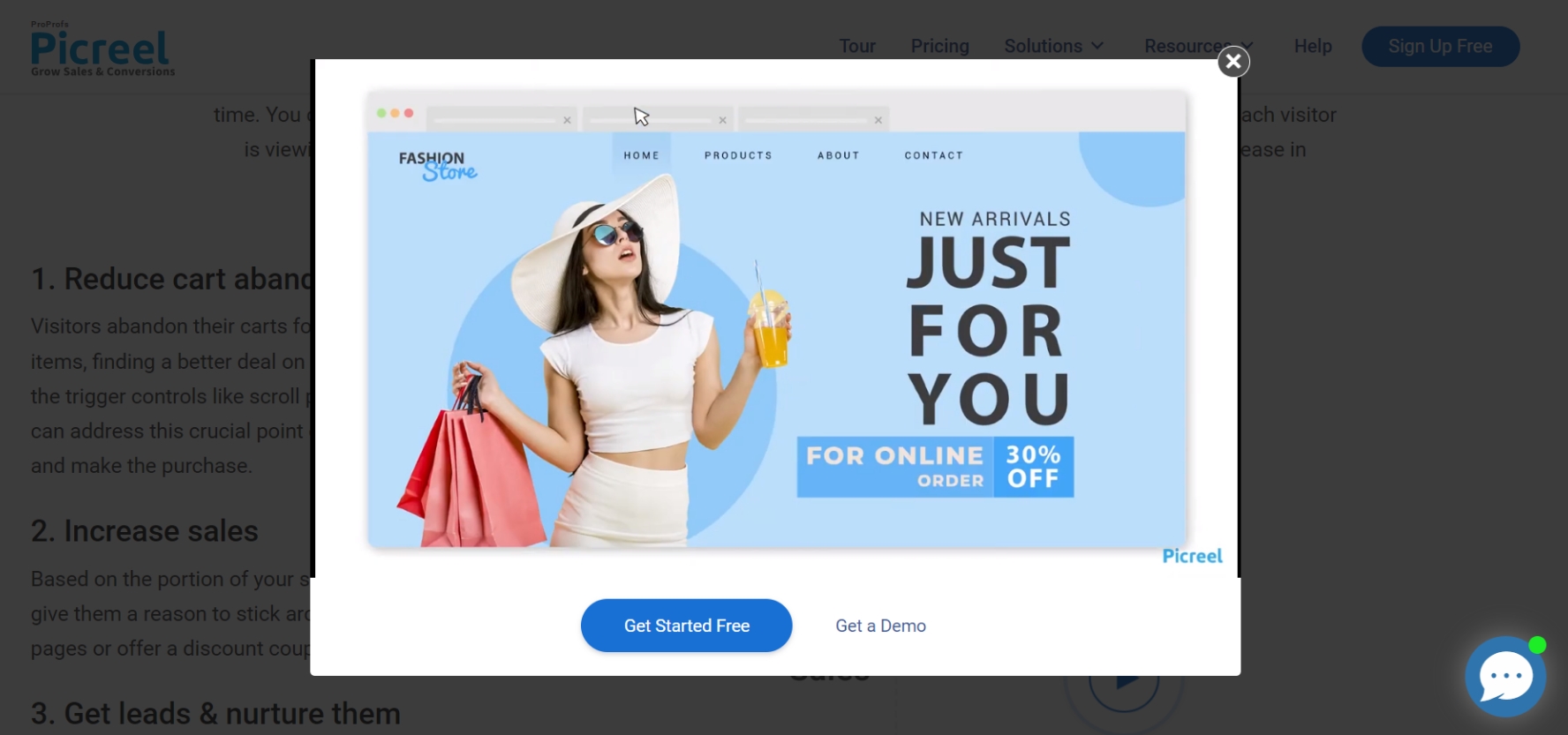
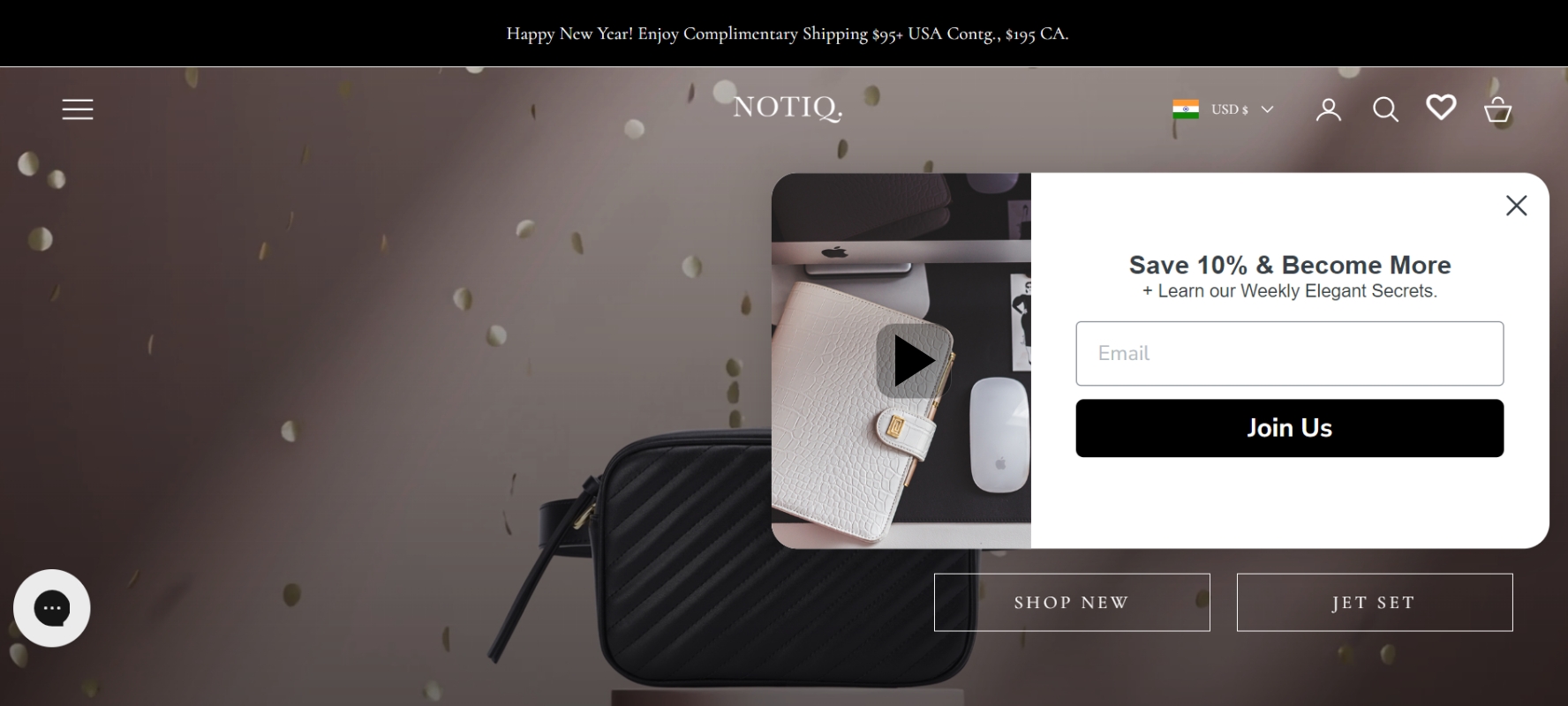
- Lead capture on a blog: scroll-depth click-triggered fires at peak engagement and the opt-in is voluntary
- Product education: demo popup video shows value before the visitor has to trust a description
- Trust building at checkout: testimonial popup addresses purchase hesitation with a peer’s real story
- Feature adoption in-app: how-to popup surfaces exactly when a user gets stuck
Get this right first before you open any popup builder.
Step 3: Upload Your Video and Build the Popup
Log in to Picreel and create a new campaign. You have two paths:
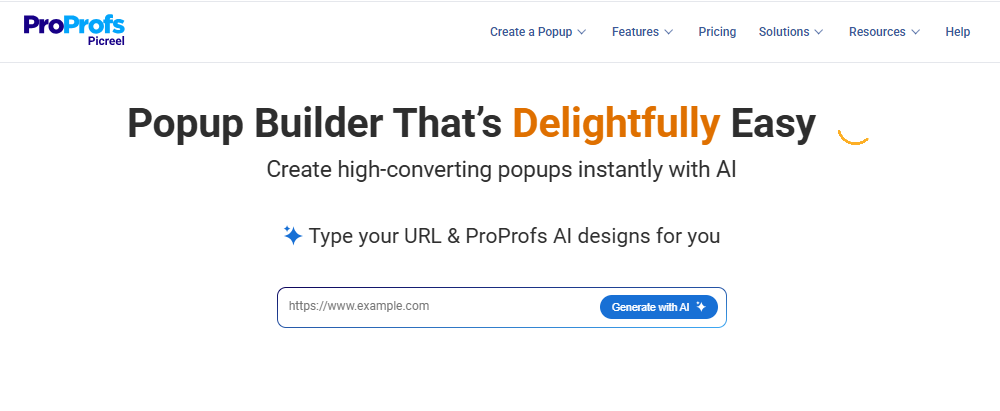
If you want to move fast, Picreel’s AI Popup Builder lets you enter your website URL, select a goal, and it generates a matching popup layout with suggested copy and CTA. There you can upload your desired video.
For more control, open the Drag and Drop Popup Builder and select a video popup template. The canvas lets you drop in your hosted video URL from YouTube, Vimeo, or Wistia, set the thumbnail image with a play button overlay, and customize the surrounding layout.

A few things that directly affect conversion rate at this stage:
- Set the popup size to approximately 50% of the screen
- Enable the lightbox popup effect so the background dims behind the popup
- Add a benefit-driven popup CTA below or beside the video player, not a generic “Submit”
- Make the close button clearly visible
- If you are capturing email, use a single-field form. Every additional field reduces opt-in rate meaningfully.
| Headline writing prompt:“My visitor is on [this page] and they care about [specific problem]. The one thing I can offer them right now that solves that problem is [offer]. Write three headline variations that lead with the benefit, not the format.” |
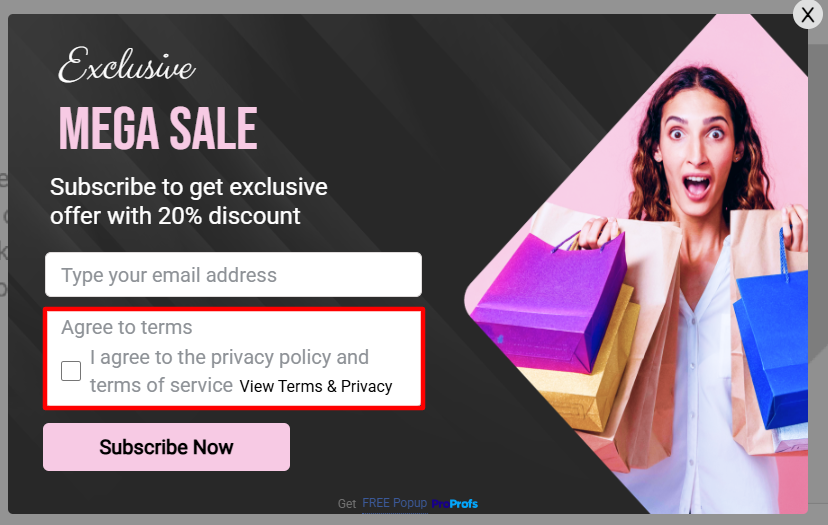
If you serve visitors in the EU, enable the GDPR consent checkbox, link to your privacy policy, and make sure the checkbox is not pre-checked.
Step 4: Customize the Video Popup Design
This is where your video popup comes to life. A good design feels clean, on-brand, and easy to engage with.
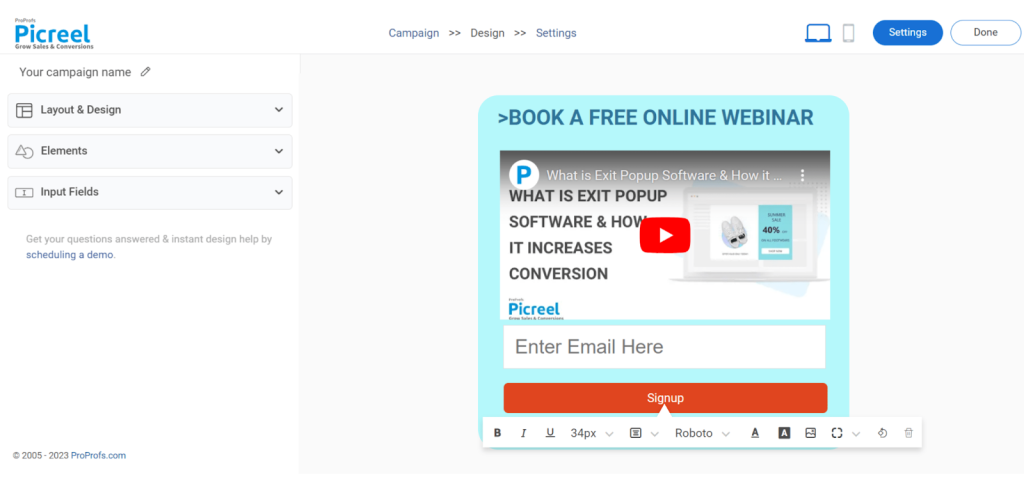
- Video placement: Keep the video front and center. It should take up most of the popup space so it’s easy to watch without distractions.
- Thumbnail and play button: Use a clear, compelling thumbnail with a visible play icon. This sets the expectation and invites users to click.
- CTA placement: Add one clear CTA below or beside the video. Keep it benefit-driven like “Start My Free Trial” or “Get the Offer.”
- Close button: Always keep it visible in the top-right corner. Easy exit builds trust and improves engagement.
- Captions: Add captions from the first frame. Many users watch without sound, especially on mobile.
- Popup size: Aim for about 50% of the screen on desktop. On mobile, use full-width but keep the video short.
- Animation: Use a smooth fade-in. Avoid aggressive animations that feel intrusive.
Once everything looks right, save and preview across devices before going live.
Step 5: Set Your Trigger and Targeting Rules
This is the step most people rush and then wonder why the popup underperforms. Smart targeting is what separates a video popup that feels helpful from one that feels like an interruption.
Trigger settings to start with:
| Setting | Recommended Value |
|---|---|
| Time delay | 15 to 25 seconds |
| Scroll depth | 50 to 70% of page |
| Exit intent | Detect the cursor moving toward the browser close button |
| Click trigger | Specific image or button with play icon overlay |
| Frequency cap | Once every 7 days per visitor |
| Hide after interaction | Always |
Targeting rules to apply using Picreel’s Advanced Targeting:

- Show a product demo video only on product pages, not sitewide
- Show exit-intent testimonial videos on pricing and checkout pages only
- Segment by new versus returning visitors. A returning visitor who has already seen your intro video does not need it again. Show them a testimonial or an upgrade offer instead.
- Combine behavioral signals using Picreel’s Smart Popup Triggers. For example, exit intent plus a minimum of 30 seconds on page means you are reaching engaged visitors, not just anyone who moves their cursor.
Step 6: Connect Your Email or CRM Tool
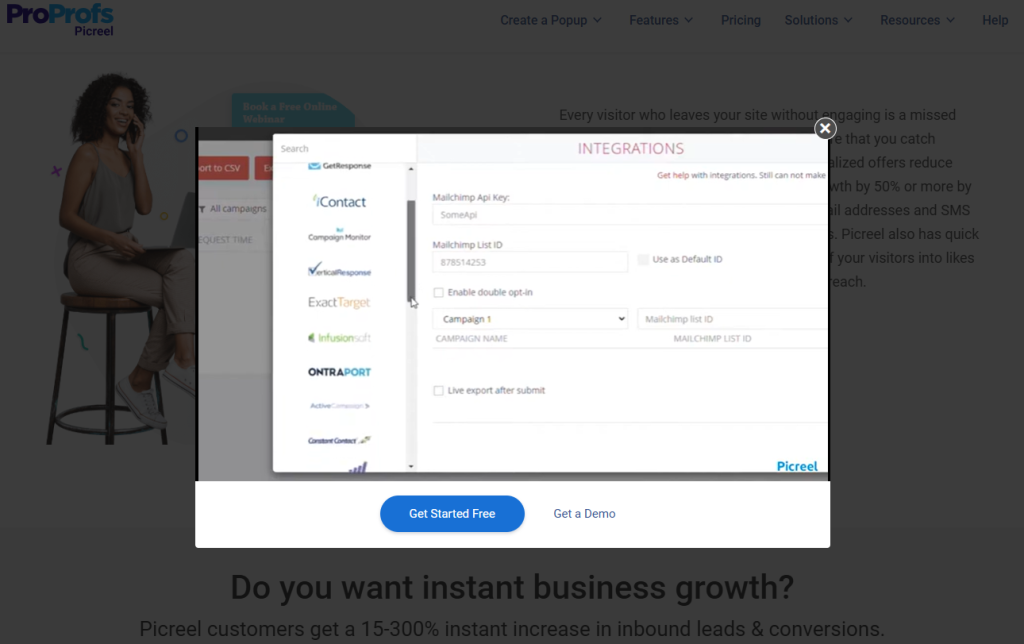
If your video popup includes a lead capture form, connect it to your email marketing or CRM platform inside Picreel’s Integrations tab. Picreel integrates directly with Mailchimp, Klaviyo, HubSpot, ActiveCampaign, Marketo, Salesforce, and more.
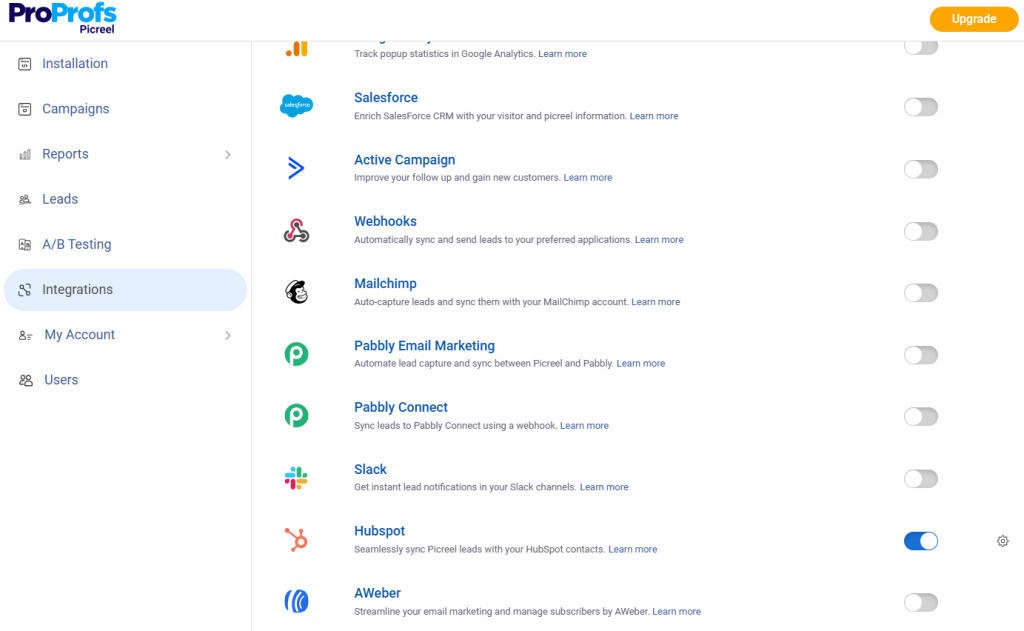
Map the email field from the popup form to the right list or segment and save. Leads flow in automatically from this point. No CSV exports. No manual imports.
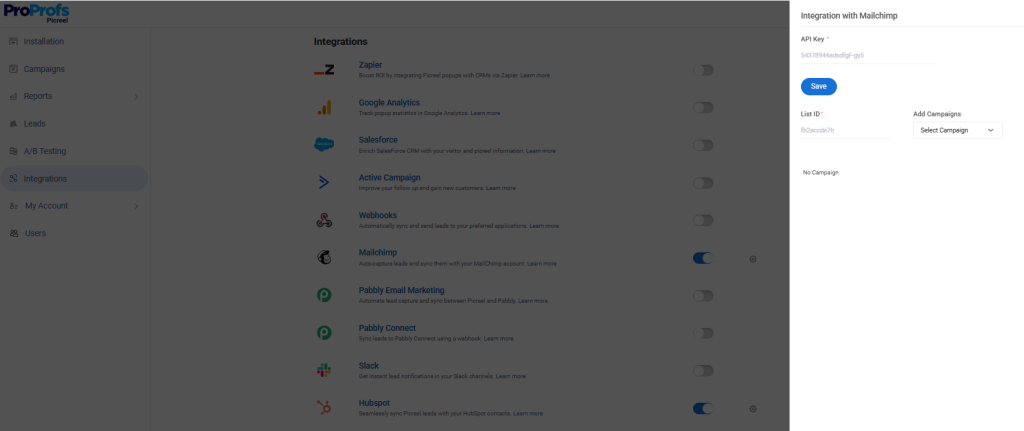
One thing I always recommend here: tag every lead with the specific popup they converted on. Someone who opted in through a product demo video is in a fundamentally different mindset than someone who converted on an exit-intent coupon video.
Different tags mean different welcome sequences, and that downstream difference in engagement compounds over time. If you run a WooCommerce store and use Klaviyo, you can map specific popups to targeted lists, which lets you trigger abandoned cart recovery sequences directly from email captures on product pages.
Step 7: Preview, Publish, and Monitor Performance
Before going live, preview the video player popup on both desktop and mobile. Confirm the video loads cleanly, the close button is easy to find, the CTA is visible without scrolling, and the sizing looks right on a smaller screen.
Once ready, set the campaign to Active. Picreel’s Real-Time Analytics tracks impressions, plays, clicks, and conversion rate in real time. In the first week, focus on these four metrics:
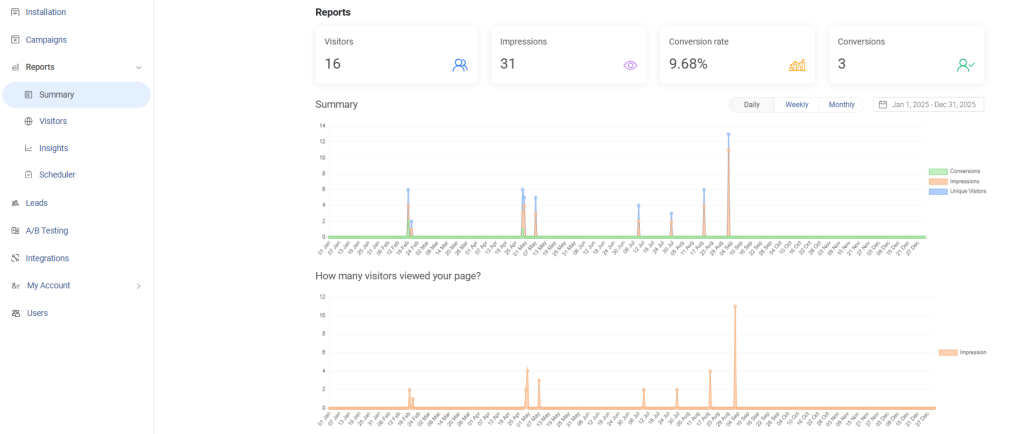
- Play rate: What percentage of visitors who see the video player popup actually hit play? If this is low, your thumbnail is not compelling enough, or the popup is firing at the wrong moment.
- Video completion rate: What percentage of those who hit play watch to the end? A sharp drop at a specific timestamp tells you exactly where to trim the video.
- CTA click-through rate: Of those who watch, how many click your CTA? If video completion is high but CTA clicks are low, the offer or button copy needs work.
- Conversion rate: Of those who click, how many actually complete the action. A high CTA click rate with low conversion usually means the post-click experience has friction.
Once you find a page and video player popup type that drives the highest conversion rate, clone that campaign and apply the same targeting logic to more pages.
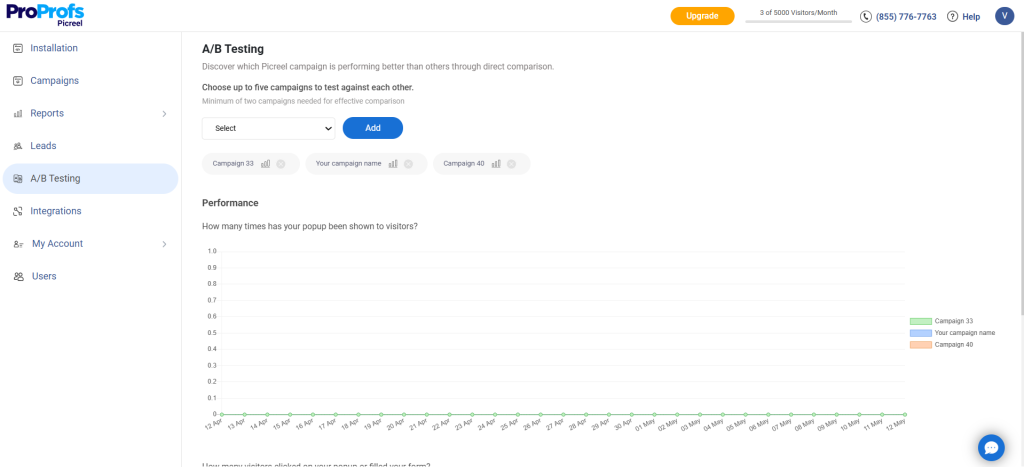
Picreel’s A/B Testing feature lets you test variables such as video length, thumbnail image, CTA copy, and trigger timing, so you can systematically improve performance rather than guess.
8 Video Popup Best Practices That Drive Real Results
Now that you know “how to popup YouTube video”, let’s see what practices you need to follow to do that. I am discussing this because a video popup that is not designed thoughtfully will hurt your conversion rate more than help it. Let’s go:
1. Keep the Video Under 90 Seconds
Attention drops fast. According to Wistia’s research in 2025, shorter videos drive higher engagement, but the ideal length depends on the goal.
Around 82% of viewers watch a how-to video under one minute, while over 50% still engage with videos between 1 and 30 minutes, showing that short videos work best for attention, while slightly longer ones help explain and drive action.
For a popup specifically, where the visitor did not come to watch a video, aim for 45 to 90 seconds maximum. Get to the point in the first five seconds or you will lose them before they even understand what you are offering.
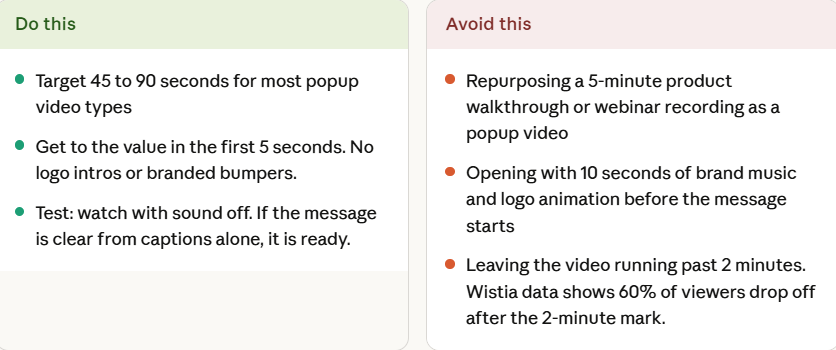
A useful test before publishing: watch your video with the sound off. If the message is still clear from captions and visuals alone, you are in good shape. If the first 10 seconds show an intro screen with a logo and music, cut it.
2. Use the Lightbox Effect
The lightbox effect darkens everything behind the video player popup so all attention goes to the video. It eliminates visual competition from the rest of your page and signals to the visitor that what they are seeing right now is worth their focus.
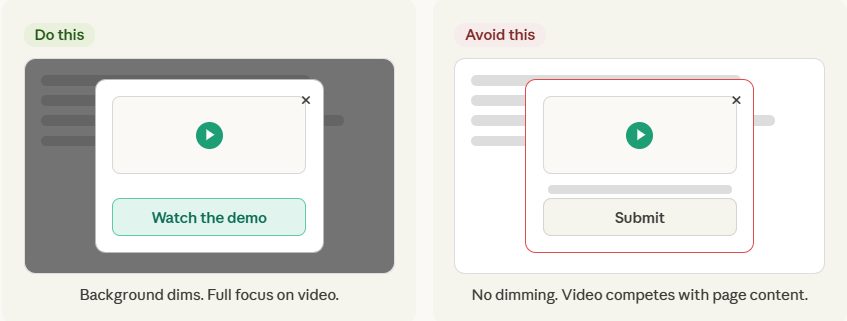
Do this: Enable the lightbox overlay in your video popup builder so the background dims to roughly 70% opacity when the video popup appears. Picreel applies this by default in video popup templates.
Avoid this: Launching a video popup without any background treatment so it competes visually with the rest of the page content behind it. Visitors split their attention and engagement drops.
3. Size the Popup to About 50% of the Screen
A video popup that takes over the full screen feels aggressive. One that is too small is hard to engage with and strains the viewing experience.
For a 1920 x 1080 screen, sizing at around 960 x 540 sits at exactly 50% of the visible area. That is the sweet spot where the video is watchable without feeling intrusive.
| Screen Size | Ideal Popup Size | Why |
|---|---|---|
| 1920 x 1080 (Full HD) | 960 x 540 | Covers 50%, fully watchable |
| 1366 x 768 (Laptop) | 683 x 384 | Same 50% ratio, clean fit |
| Mobile (any) | Full width, auto height | Captions required, keep under 60 seconds |
4. Always Include a Clear and Visible Close Button
Hiding the close button to force viewers to watch is one of the fastest ways to damage trust and bounce rate simultaneously. Counterintuitively, a clearly visible X button actually improves engagement. When visitors know they can leave at any time, they are less anxious and more willing to stay and watch.
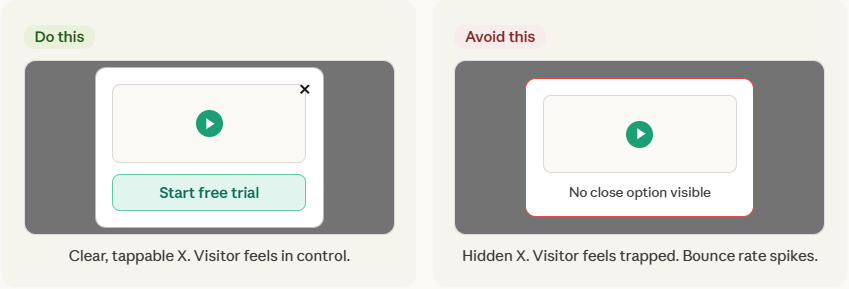
Do this: Place a clearly visible close button in the top right corner of the video popup. Make it large enough to tap on mobile. Give it enough contrast to be immediately obvious.
Avoid this: Hiding the close button, placing it in a low-contrast color that blends into the background, or making it so small that mobile users cannot tap it without zooming in. Visitors who cannot find the close button do not convert. They bounce.
5. Add Captions to Every Video
This is non-negotiable for mobile audiences. If your video popup does not have captions, mobile visitors will see moving images with no context and close it within two seconds. Captions keep them watching regardless of whether they are on a quiet commute or in a crowded office.
Captions also make your content more accessible and help with comprehension for non-native language speakers, which is a real consideration for any brand with international traffic.
6. Use a Thumbnail With a Play Button, Not Autoplay
Autoplay with sound is one of the most reliably disliked experiences on the web. It startles visitors, and the immediate reaction is to close the popup video before it says anything useful.
A thumbnail image with a visible play button signals that the video is there, inviting the visitor to choose when to watch.
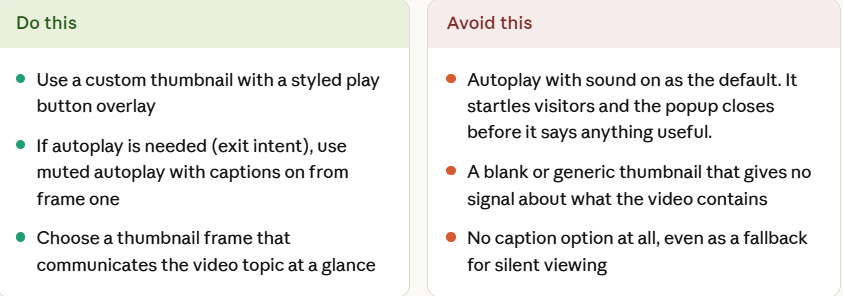
Do this: Design a custom thumbnail that shows the most compelling frame of your video, one that communicates the topic at a glance. Overlay a clearly styled play button so visitors know this is interactive.
Avoid this: Using autoplay with sound as the default. If your use case genuinely requires autoplay, for example, an exit-intent popup where you need to grab attention in the split second before someone leaves, use muted autoplay with captions visible from the very first frame.
7. Follow the Video With One Clear CTA
The video earns attention and builds intent. The CTA is where the conversion actually happens. After the video ends, there should be exactly one action you want the visitor to take: claim the offer, start the trial, download the guide, or book the call.
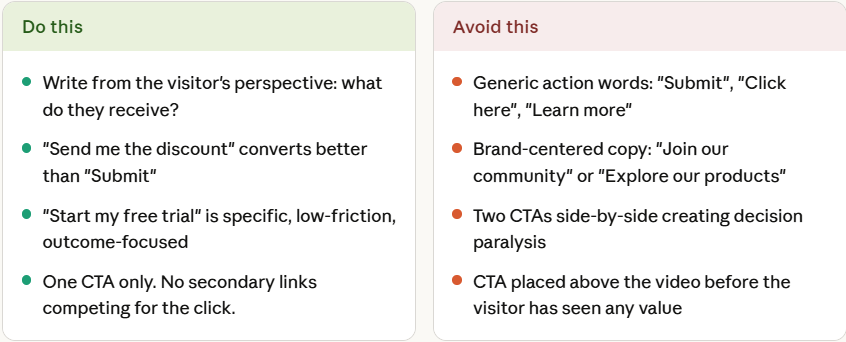
One button. Benefit-driven copy. No other distractions are visible in the popup.
“Send me the discount” will always outperform “Submit.” “Start my free trial” will always outperform “Sign up.” Write the CTA from the visitor’s perspective, not yours.
8. Choose Your Video Hosting Platform Carefully
Where you host the video affects the visitor experience more than most marketers realize. This is not a cosmetic decision.
| Platform | Best For | Watch Out For |
|---|---|---|
| YouTube | Free hosting, global reliability | Ads run on your video. Competitor suggestions appear after playback ends. Both pull visitors off your site. |
| Vimeo | Clean ad-free playback, professional look | Business features require a paid plan. |
| Wistia | Conversion-focused: heatmaps, drop-off data, viewer analytics, lead forms inside the video | Higher cost, but best ROI when performance data matters. |
For video popups specifically, I recommend Wistia for any serious campaign especially if you want to produce professional-looking videos with built-in analytics that tell you exactly where viewers drop off, which moments are re-watched, and whether viewers who watched 80% of the video converted at a higher rate than those who watched 20%. That data is what drives real optimization.
FREE. All Features. FOREVER!
Try our Forever FREE account with all premium features!
Turn More Visitors Into Customers With Smarter Video Popups
Video popups are not a gimmick. They are a practical upgrade to a strategy most marketers are already running. If you are already using popups to capture leads, recover abandoning visitors, and promote offers, adding short, well-targeted videos to that strategy will improve every metric that matters: play rate, completion, CTA clicks, and conversion.
The key is not to just add video and hope for the best. Match the video type to the moment in the visitor’s journey. Trigger it at the right behavioral signal. Keep it short, captioned, and paired with a single clear CTA. Then measure what the data tells you and refine from there.
If you want to get a campaign live today without writing any code, Picreel gives you the templates, targeting logic, and real-time analytics to launch and optimize in under 30 minutes.
Frequently Asked Questions

Can I use a video popup to capture email leads?
Yes, and it works really well. A short value-driven video paired with a simple email field can boost signups. The video builds interest first, which makes users more willing to share their email.
Do video popups slow down my website or hurt SEO?
Not if done right. Load the video only when the popup appears and use platforms like YouTube or Vimeo. Most modern popup tools are optimized, so your page speed and SEO stay unaffected.
How do video popups compare to image popups for engagement?
Video usually performs better. It adds voice, motion, and emotion, which makes your message more compelling. For complex products or higher-value offers, this can make a noticeable difference in conversions.
What types of videos work best inside a popup?
Keep it short and focused. Product demos, quick how-tos, testimonials, or limited-time offers work best. Think of it as a direct message to your visitor, not a long presentation.
FREE. All Features. FOREVER!
Try our Forever FREE account with all premium features!

 We'd love your feedback!
What did you like & how can we make it even better?
 Thanks for your feedback!
 Ask Your Question
Have a question? Get expert help to make your decision easier.