

You’re probably losing customers right now and don’t even realize how many. I learned this the hard way after watching high-intent visitors leave my site without buying, subscribing, or filling out a form.
According to Baymard Institute’s research in 2025, nearly 70% of online shopping carts are abandoned before checkout. That means most of the traffic you pay for doesn’t convert.
I started looking beyond Yieldify because I wanted faster campaign launches, smarter personalization, transparent pricing, and tools my team could actually manage without depending on account managers.
After testing multiple platforms, reading verified G2 and Capterra reviews, and talking with ecommerce marketers in Slack communities, I found several alternatives that outperform Yieldify in different areas.
In this blog, I’ll break down the best Yieldify alternatives, their pros and cons, pricing, standout features, and which tool is best for your specific use case.
Why Businesses Look for Yieldify Alternatives
Before getting into the tools, it’s worth being honest about what’s actually pushing businesses away from Yieldify. After testing multiple platforms and talking to e-commerce marketers, I kept hearing the same frustrations come up repeatedly.
1. Enterprise Pricing Fatigue
Yieldify prices on request, which means you’re negotiating a contract before you even know if the platform fits your workflow. For mid-market ecommerce brands and growing DTC businesses, that creates friction immediately.
Most teams searching for a cheaper Yieldify alternative are not trying to spend less just for the sake of it. As I found during my research, they want stronger ROI from their personalization budget, and the math gets difficult when pricing is opaque.
2. Slow Experimentation
Growth teams cannot afford to wait days for campaigns to go live. The ecommerce brands scaling fastest in 2026 are constantly testing new offers, updating onsite messaging, and refining behavioral triggers in real time.
From what I’ve seen, Yieldify’s managed-service approach works at a slower pace. If your team values speed and autonomy, that dependency quickly becomes limiting.
3. Generic Personalization
Today’s shoppers expect personalized product recommendations, behavior-based offers, and messaging tailored to their buying intent. Basic overlays without deeper segmentation feel outdated.
Several marketers I spoke with mentioned that Yieldify’s targeting rules struggle to support more complex customer journeys, especially for brands heavily focused on behavioral data and funnel segmentation.
4. Developer Dependency
Most marketers want to launch campaigns themselves without relying on engineering teams. No-code builders, drag-and-drop editors, and Google Tag Manager implementations have become standard expectations.
Personally, I found that teams move much faster when campaign creation stays entirely in marketing’s hands instead of sitting in a developer queue.
5. Multi-Channel Personalization Needs
Popup tools alone are no longer enough. E-commerce brands now manage email capture, SMS opt-ins, exit intent campaigns, embedded forms, dynamic banners, and personalized product recommendations simultaneously.
The strongest Yieldify alternatives connect natively with platforms like Klaviyo and HubSpot while giving teams unified reporting across all these touchpoints, which is something modern growth teams increasingly expect.
What to Look for in the Best Yieldify Alternatives
Not all popup and personalization tools are built the same. When I evaluate a replacement for Yieldify, I focus on these capabilities:
- E-commerce personalization: Can the tool segment visitors by behavior, cart status, product interest, and purchase history?
- Conversion rate optimization features: Is A/B testing available on all plans, or gated behind a premium tier?
- Behavioral targeting options: Does it support exit intent, scroll depth, time on page, referral source, and device type?
- Customer segmentation: Can you target new vs. returning visitors, or build audience segments from CRM data?
- Lead capture flexibility: Does it support email, phone, checkbox fields, and multi-step forms?
- On-site messaging controls: Can you run nanobars, banners, full-screen overlays, and slide-ins from one dashboard?
- Integrations: Native connections to Shopify, Klaviyo, HubSpot, GA4, and Salesforce matter. Zapier-only integrations add cost and lag.
- Pricing scalability: Does the pricing model grow reasonably as your traffic and team size grow?
- Reporting and attribution: Can you see conversion data by campaign, segment, and traffic source without upgrading?
Keep these in mind as you go through the list below.
10 Best Yieldify Alternatives
If you’re comparing Yieldify alternatives, you’re probably looking for one of three things: more control, better pricing, or stronger conversion results.
I’ve put together this list to help you quickly identify which platform actually fits your growth goals, tech stack, and team setup without spending weeks on demos and sales calls.
Whether you want advanced personalization, deeper A/B testing, or a simpler way to grow email signups and sales, these tools each solve a different part of the conversion optimization puzzle.
| Tool | Best For | Starting Price | G2 Rating |
| Picreel | Getting More Leads, Conversions, and Sales | $9.99/month | 4.5/5 |
| OptiMonk | E-commerce personalization and segmented campaigns | $19/month | 4.8/5 |
| VWO | Deep A/B testing and CRO experimentation | Custom Price | 4.4/5 |
| Wisepops | Design-first ecommerce brands on Shopify and Klaviyo | €499/month. | 4.5/5 |
| Sleeknote | Non-intrusive popups that match brand aesthetics | €49/month | 4.3/5 |
| OptinMonster | Lead capture with advanced trigger types | $7/month | 4.3/5 |
| Justuno | Behavioral targeting and product recommendations | $39/month | 4.3/5 |
| ConvertFlow | On-site funnel personalization for SaaS and DTC | $29/month | 4.5/5 |
| Privy | SMB ecommerce email and SMS list growth | Custom Quote | 4.6/5 |
| Klaviyo Forms | Klaviyo-native email capture for existing users | $45/month | 4.6/5 |
1. Picreel: Best for Getting More Leads, Conversions, and Sales
I like Picreel because it focuses on one thing really well: helping me convert the traffic I already have into more leads and customers. What stood out to me first was the AI Popup Builder. I just entered my website URL, and it generated a campaign automatically, so I could get something live in under fifteen minutes without needing coding help.
I also found the Exit Intent Triggers genuinely useful for reducing bounce rates. When visitors move their cursor toward closing the tab, Picreel shows a targeted popup at the perfect moment. Beyond that, the Smart Popup Triggers let me target users based on scroll depth, time on page, click behavior, and even mobile exit signals, which gave me a lot more control over when campaigns appear.
Whenever I’m short on time, I generally pick from ready-made templates or build from scratch, choose formats like nanobars or full-screen overlays, and the editor lets me adjust layouts, colors, and elements without any friction. Plus, it connected smoothly with the tools I was already using like Klaviyo, Mailchimp, HubSpot, Salesforce, and Shopify. From what I’ve seen, many businesses report noticeable improvements in leads and conversions after switching to it.
Pros:
- AI Popup Builder generates ready campaigns from your URL in under 15 minutes
- Exit Intent Triggers and Smart Popup Triggers cover desktop and mobile behavioral signals
- Advanced Targeting segments by location, referral source, device, and visitor status
- A/B Testing with Real-Time Analytics identifies your highest-converting variation fast
- Native integrations with Klaviyo, HubSpot, Salesforce, Shopify, and 700+ tools
Cons:
- Cloud-only, no downloadable or on-premise version
- No dark mode in the editor
Why Choose It Over Yieldify: Picreel gives you self-serve control, transparent pricing, and ecommerce personalization that goes live immediately. No managed service dependency, no pricing negotiation, and no developer required. For DTC brands, Shopify stores, and any team already using Klaviyo, this is the strongest fit on the market right now.
User Rating: 4.5/5
Price: Offers a forever-free plan for up to 5K visitors (For WordPress, you may need the Enterprise account). Paid plans start at $9.99/month.
2. OptiMonk: Best for Ecommerce Personalization and Segmented Campaigns
I came across OptiMonk through a CRO Slack community where a growth marketer was comparing it directly with Yieldify. The conversation was basically unanimous: OptiMonk offers comparable personalization features with a transparent pricing model, a usable free tier, and none of the enterprise contract friction.
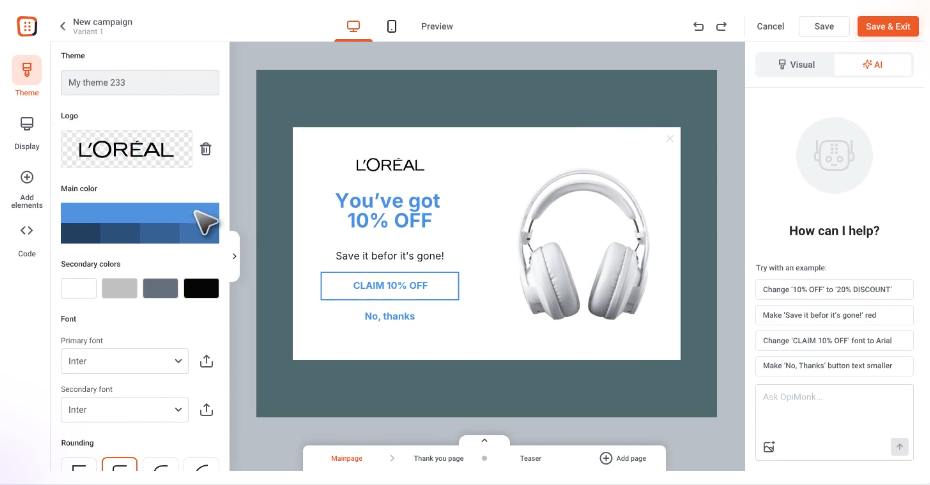
OptiMonk is purpose-built for ecommerce personalization. The platform lets you create segmented campaigns based on cart value, number of pages visited, product categories browsed, and traffic source. You can run dynamic product recommendation popups that change based on what the visitor has already viewed.
The Smart Personalizer goes further by swapping out text across your actual page content, not just popups, so every visitor sees a message matched to their behavior. If you’ve been frustrated by Yieldify’s basic segmentation logic, OptiMonk’s targeting rules will feel like a completely different category of tool.
Pros:
- Smart Personalizer personalizes page text and popups simultaneously for the same visitor
- Product recommendation popups pull from browsing behavior in real time
- Extensive A/B testing with detailed split analytics included on all plans
- Free plan supports unlimited campaigns for up to 15,000 pageviews per month
- Direct integrations with Klaviyo, Shopify, WooCommerce, and major CRMs
Cons:
- Advanced personalization features have a learning curve for beginners
- Some design templates feel dated compared to more design-focused tools
Why Choose It Over Yieldify: OptiMonk matches Yieldify’s personalization capabilities at a fraction of the cost, with transparent pricing and full self-serve control. If Yieldify’s targeting felt too simplistic for your buyer journey complexity, OptiMonk is the direct answer.
User Rating: 4.8/5
Price: Free plan available. Paid plans start at $19/month.
3. VWO: Best for Deep A/B Testing and CRO Experimentation
A colleague at a performance marketing agency introduced me to VWO when I was trying to find the most serious A/B testing platform that also handled onsite messaging. He ran experimentation programs for several e-commerce clients and said VWO was the only tool that gave him the data depth needed to justify campaign decisions to stakeholders.
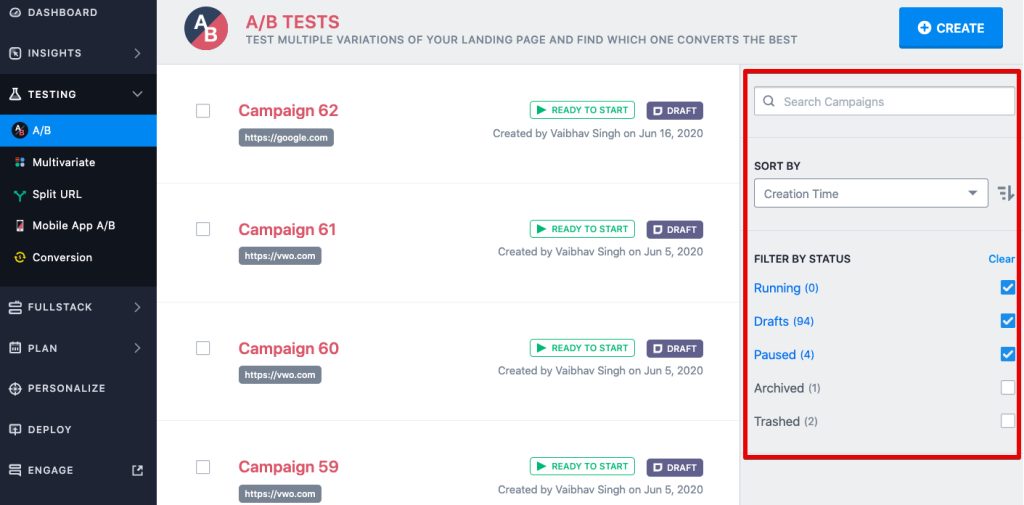
VWO is a full CRO platform, not just a popup tool. It covers A/B testing, split URL testing, multivariate testing, session recordings, heatmaps, funnel analytics, and surveys alongside onsite messaging and personalization.
Where Yieldify focuses on managed overlays, VWO is built for teams who want to run rigorous experiments and understand exactly why conversion rates are moving. The behavioral analytics stack alone gives you more insight than most popup tools offer at any price.
Pros:
- Full experimentation suite covering A/B, multivariate, and split URL testing
- Session recordings and heatmaps reveal where visitors lose interest before converting
- On-site messaging, popups, and behavioral targeting integrated with the testing engine
- Funnel analytics track conversion drop-off across every step of the purchase journey
- Integrates with GA4, Segment, Salesforce, and major ecommerce platforms
Cons:
- Overkill for teams only looking for popup and lead capture capabilities
- Entry pricing is significantly higher than most tools on this list
Why Choose It Over Yieldify: If Yieldify’s A/B testing felt shallow and your team needs proper experimentation infrastructure, VWO is the upgrade. The combination of testing depth, behavioral analytics, and onsite personalization in one platform is rare at this level.
User Rating: 4.4/5
Price: Custom Price
4. Wisepops: Best for Design-First Ecommerce Brands on Shopify and Klaviyo
A brand designer in my network recommends Wisepops to every ecommerce client who cares about brand consistency in their campaigns. She pointed out something that I’ve since confirmed myself: cheap-looking popups actively undermine trust, and most tools in this category don’t take design quality seriously enough.
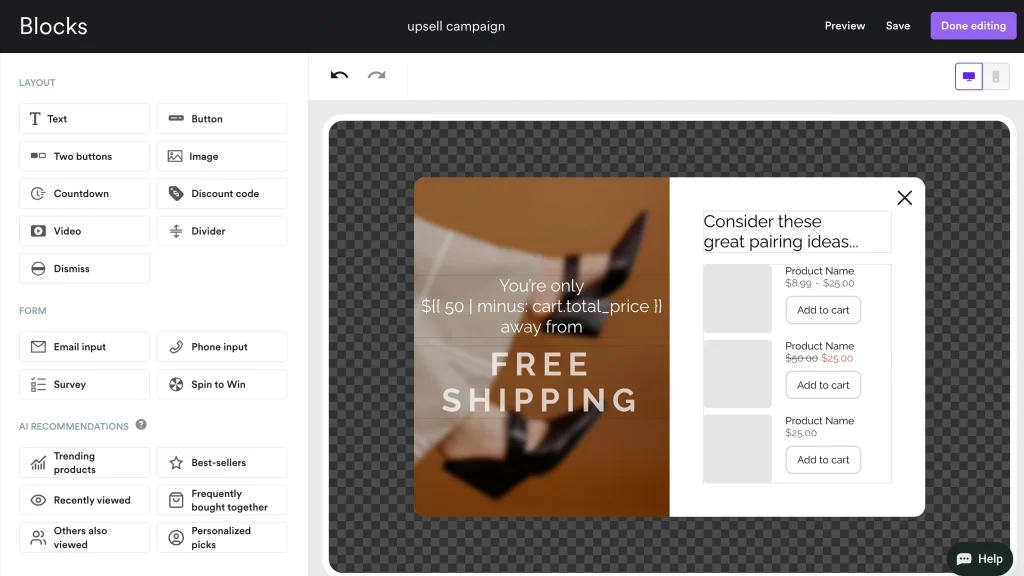
Wisepops stands out because the visual quality of its campaigns is noticeably higher than the industry average. The templates are polished, the editor gives you genuine creative control, and the result looks like a native part of your site rather than a third-party overlay.
The Klaviyo and Shopify integration is tight enough that segmented email flows connect without friction. Targeting covers browsing behavior, traffic source, and cart status, and custom fields let you capture email, phone, and preferences within the same campaign flow.
Pros:
- Design quality stands clearly above most competitors in this category
- Seamless native integration with Klaviyo, Shopify, and Segment
- Drag and drop editor that non-designers can operate confidently
- A/B testing built in for ongoing campaign optimization
- Targeting rules cover traffic source, cart status, and behavioral signals
Cons:
- Heavy focus on email-driven campaigns may feel limiting for non-email use cases
- Entry pricing is higher than most tools on this list
Why Choose It Over Yieldify: For DTC brands where visual identity matters, Wisepops gives you better design, tighter Klaviyo integration, and cleaner Shopify compatibility. If Yieldify’s campaigns felt off-brand, Wisepops solves that directly.
User Rating: 4.5/5
Price: Starts at €499/month.
5. Sleeknote: Best for Non-Intrusive Popups That Match Your Brand
I found Sleeknote through a CRO forum where multiple practitioners working with high-traffic ecommerce sites kept recommending it. Their common thread was that it doesn’t feel like a traditional popup tool. It feels like a native part of the site.
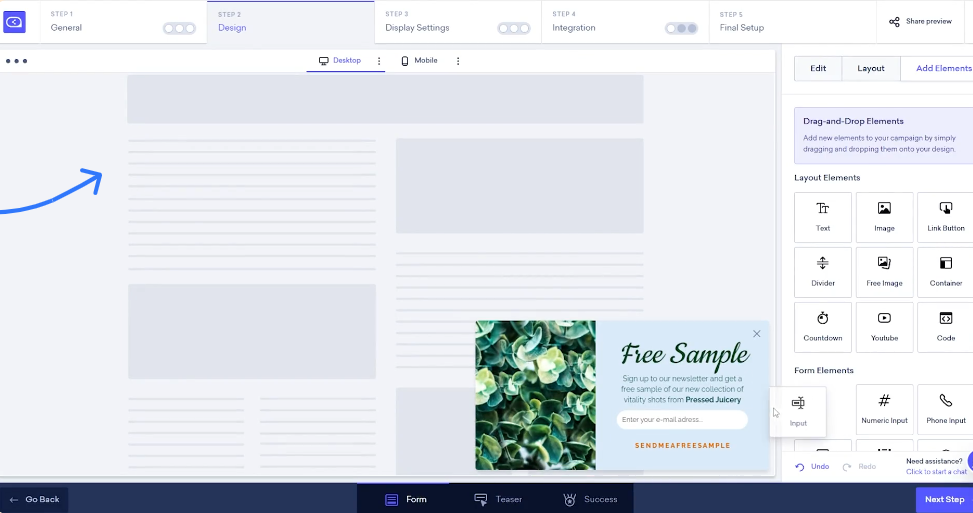
That’s intentional. Sleeknote defaults toward slide-ins and embedded forms rather than full-screen takeovers, which means lower friction for visitors and better reception from brands that have had bad experiences with aggressive popup strategies.
The dedicated mobile editor treats mobile as a first-class design surface rather than a resized version of the desktop campaign. For larger teams, the real-time analytics deliver the reporting depth that stakeholders need to justify popup spend. If your visitors have complained about popups being disruptive, Sleeknote is the tool designed to fix that perception.
Pros:
- Non-intrusive formats reduce visitor friction while still capturing leads effectively
- Dedicated mobile editor for designing mobile-first campaigns independently
- Advanced triggers covering time on page, scroll depth, and behavioral signals
- Real-time analytics with detailed campaign performance breakdowns by segment
- Integrates with HubSpot, Campaign Monitor, Drip, and other major platforms
Cons:
- Some popup types lack full mobile optimization despite the dedicated editor
- Compatibility issues reported with certain browsers and WordPress plugins
Why Choose It Over Yieldify: Sleeknote wins on brand consistency, design quality, and mobile-first thinking. For brands where user experience is non-negotiable and full-screen takeovers feel off-brand, Sleeknote justifies its cost.
User Rating: 4.3/5
Price: Starts at €49/month.
6. OptinMonster: Best for Lead Capture With Advanced Trigger Types
I first used OptinMonster several years ago when exit intent popups were still considered a novelty. The breadth of trigger types available in the platform was genuinely impressive at the time, and that core strength still holds.
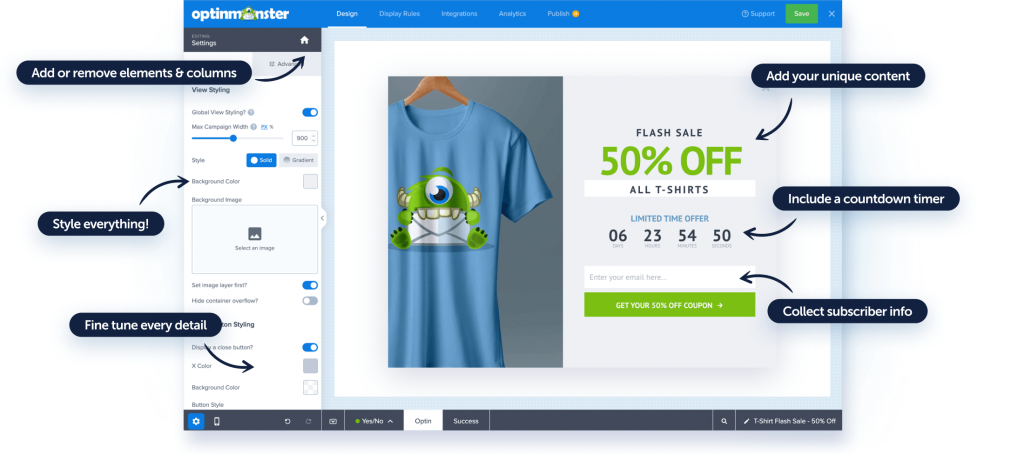
What has changed is the pricing model, which now gates several key features behind higher tiers, making it less attractive for teams who want everything accessible at entry level. OptinMonster supports exit intent, scroll triggers, time delays, inactivity detection, click-based triggers, and MonsterLinks that turn any image or button into a popup trigger.
The campaign targeting includes referral source, cookie-based rules, and geolocation. For teams coming from Yieldify who need a self-serve platform with a wide trigger library and a proven track record, OptinMonster covers the fundamentals well.
Pros:
- Wide trigger library including exit intent, inactivity detection, and MonsterLinks
- Geolocation and cookie-based targeting rules for precise campaign control
- Drag and drop canvas builder with a large template library
- Integrates with Klaviyo, Mailchimp, Salesforce, HubSpot, and most major platforms
- Campaign scheduling and campaign-level analytics included
Cons:
- Exit intent and UTM tracking locked behind the Pro plan at $89.99/month
- Site limits on base plans create friction for agencies and multi-site businesses
Why Choose It Over Yieldify: OptinMonster gives you self-serve control and a trigger library that goes beyond what Yieldify’s managed service offers. The pricing tiers are a consideration, but for teams primarily focused on lead capture rather than full personalization, it’s a solid move.
User Rating: 4.3/5
Price: Starts at $7/month.
7. Justuno: Best for Behavioral Targeting and Product Recommendations
I heard about Justuno from a growth marketer at a DTC brand who was specifically trying to solve product recommendation personalization at scale. She said she’d tested four other tools before landing on Justuno, and none of them handled product-level behavioral targeting the way she needed.
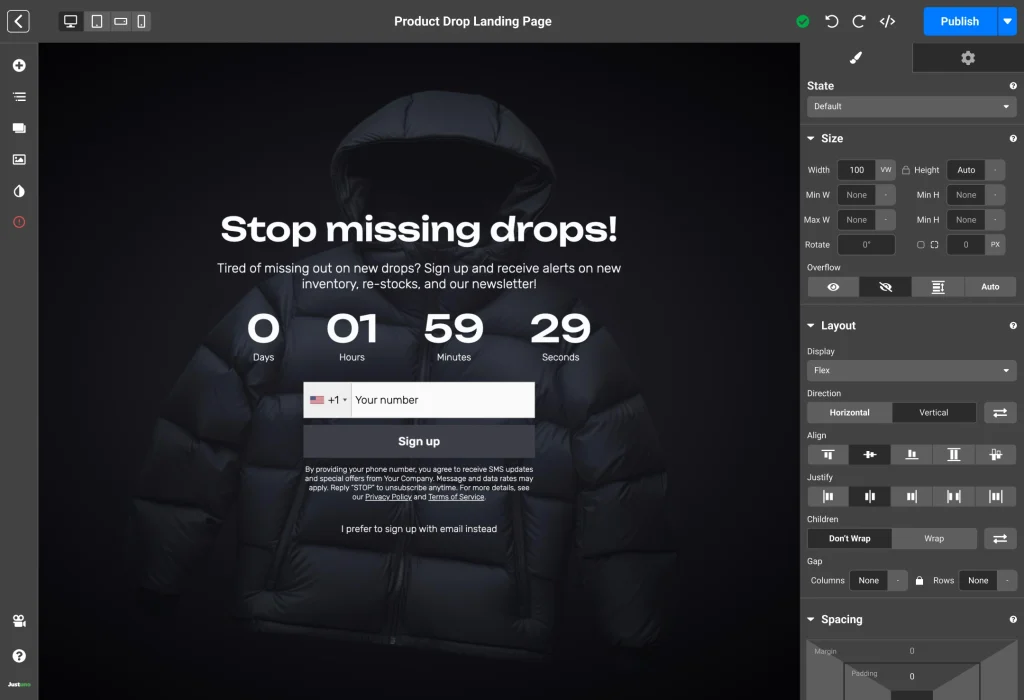
Justuno’s Commerce AI pulls real-time browsing data to serve product recommendations inside popups, banners, and on-site messages. The targeting engine supports cart value thresholds, product category filters, and customer segment rules, which means your offers are dynamically matched to what each visitor actually cares about.
The platform also covers upsell and cross-sell campaigns that run post-add-to-cart, which most pure popup tools don’t touch at all.
Pros:
- Commerce AI serves product recommendations inside popups based on real-time behavior
- Upsell and cross-sell campaigns run post-add-to-cart for higher order values
- Targeting engine supports cart value thresholds and product category filters
- A/B testing and analytics included for ongoing optimization
- Native integrations with Shopify, BigCommerce, Klaviyo, and Salesforce
Cons:
- Setup complexity is higher than most tools on this list
- Some advanced features require onboarding support to implement correctly
Why Choose It Over Yieldify: Justuno fills the product recommendation and upsell gap that Yieldify doesn’t address well. If your primary goal is increasing average order value through behavioral targeting and dynamic product offers, Justuno is the most focused tool for that use case.
User Rating: 4.3/5
Price: Starts at $39/month.
8. ConvertFlow: Best for On-Site Funnel Personalization for SaaS and DTC
A SaaS founder I met at a marketing conference had switched from Yieldify to ConvertFlow six months earlier and told me the personalization capabilities changed how he thought about on-site engagement entirely.
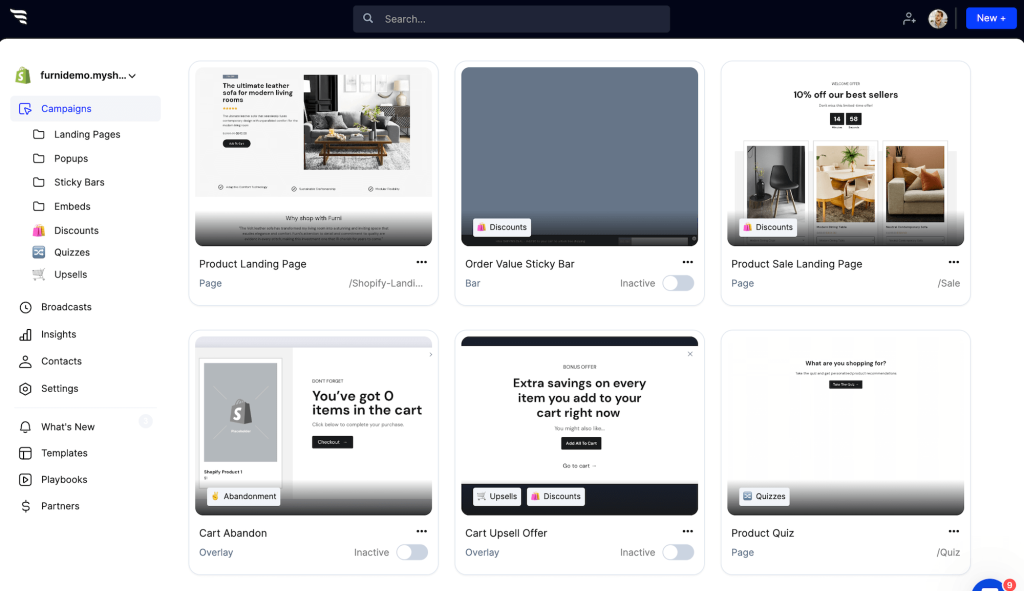
His team was shipping personalized campaigns without routing anything through a developer, and conversion rates on their pricing page had moved meaningfully since the switch. ConvertFlow lets you build multi-step funnels, surveys, and personalized CTAs that adapt based on funnel stage, referral source, previous behavior, and custom data fields.
It’s less about individual popups and more about orchestrating the entire on-site experience. For SaaS companies running nurture sequences and DTC brands with complex customer journeys, that level of message-to-segment precision is what separates a 2 percent conversion rate from a 7 percent one.
Pros:
- Multi-step funnels and surveys personalize the full on-site experience, not just popups
- Targeting rules adapt campaigns by funnel stage, referral source, and visitor behavior
- Comprehensive split testing with detailed variant performance data
- Drag and drop editor with real-time preview and a clean interface
- Integrates with HubSpot, Klaviyo, Salesforce, Shopify, and major CRMs
Cons:
- No built-in CRM, so lead storage requires an integration
- Fewer popup templates than most tools focused purely on lead capture
Why Choose It Over Yieldify: ConvertFlow’s personalization depth is more sophisticated than Yieldify’s equivalent features, and it puts full control in the hands of your marketing team. For SaaS and DTC brands that want to orchestrate the entire on-site journey, it’s the stronger long-term investment.
User Rating: 4.5/5
Price: Starts at $29/month.
9. Privy: Best for SMB Ecommerce Email and SMS List Growth
Privy kept coming up when I was scrolling through Reddit threads about affordable alternatives, specifically in communities where small Shopify store owners were the loudest voices. The pattern was consistent: Privy does what it promises, it’s affordable, and it doesn’t require a consultant to configure.
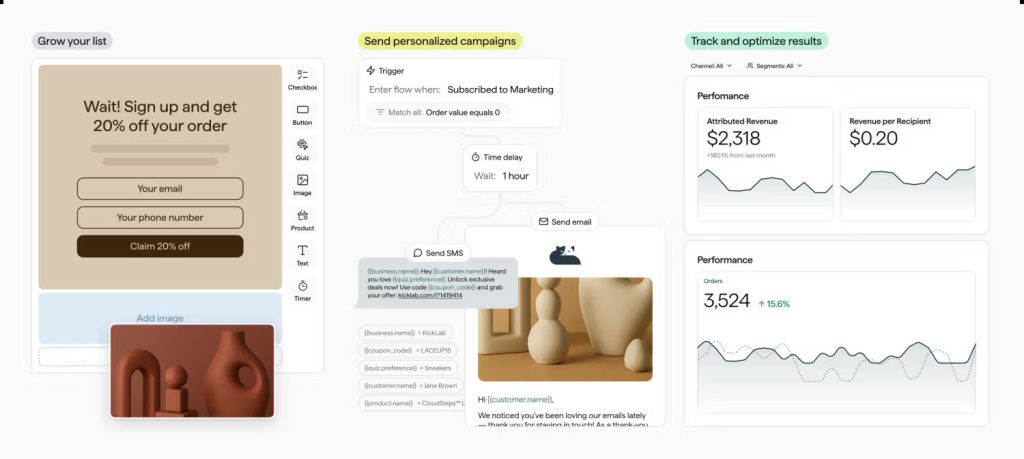
Privy is built for simplicity. Email capture popups, cart abandonment recovery, spin to win wheels, and SMS capture forms are all available from a clean dashboard that a solo operator can navigate without any training. The Klaviyo and Mailchimp integrations are native and reliable.
It won’t match the behavioral targeting depth of VWO or the personalization sophistication of OptiMonk, but for an SMB ecommerce brand that wants to grow its list and recover abandoned carts without enterprise complexity, Privy delivers the basics extremely well.
Pros:
- Purpose-built for Shopify with a fast, friction-free setup process
- Native Klaviyo, Mailchimp, and SMS integrations work reliably out of the box
- Cart abandonment emails included alongside popup campaigns
- Spin to win and gamified capture formats available on all plans
- Free plan supports unlimited popups with Privy branding
Cons:
- Limited behavioral targeting compared to mid-market and enterprise tools
- Reporting is basic and doesn’t support deep conversion attribution
Why Choose It Over Yieldify: For small ecommerce businesses and early-stage Shopify stores, Privy is the most practical cheaper Yieldify alternative on this list. The pricing is transparent, the setup is fast, and it covers the use cases that matter most at the SMB stage.
User Rating: 4.6/5
Price: Custom Quote
10. Klaviyo Forms: Best for Klaviyo-Native Email Capture
I almost left Klaviyo Forms off this list because it’s not a standalone tool. But I kept hearing from e-commerce teams already deep in the Klaviyo ecosystem who wanted to consolidate their stack rather than manage a separate popup vendor. For those teams, Klaviyo Forms is the most overlooked option on the market.
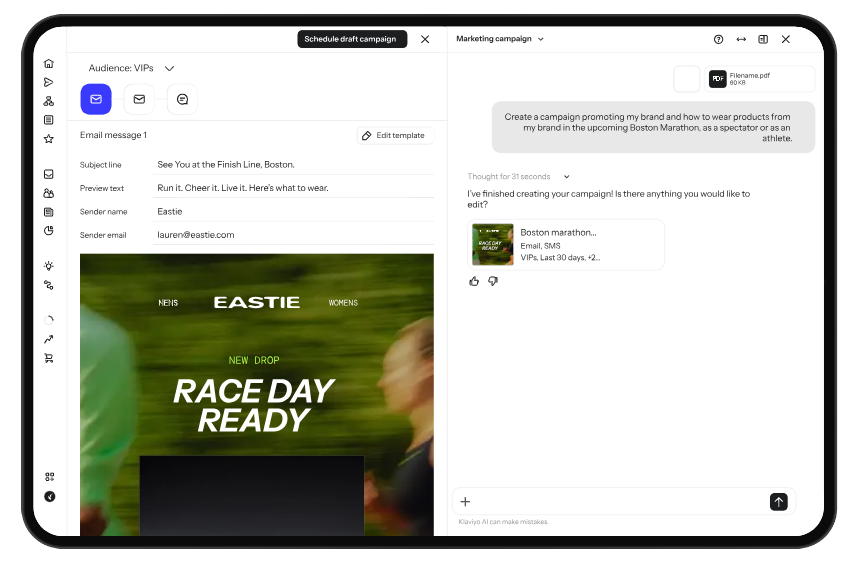
If your entire email marketing, segmentation, and automation workflow lives inside Klaviyo, adding a separate popup tool creates data sync delays, additional integration complexity, and extra cost. Klaviyo Forms eliminates all of that.
Leads captured through forms flow directly into your Klaviyo segments in real time. Popup targeting inherits the same audience logic you’re already using for your email flows, which means your capture campaigns and your nurture sequences work from identical data.
Pros:
- Leads flow directly into Klaviyo segments in real time with zero sync delay
- Popup targeting inherits your existing Klaviyo audience logic
- No additional integration cost or Zapier middleware required
- Basic popup types including flyouts, embeds, and full-page forms included
- Consistent performance data across capture and email in one reporting view
Cons:
- Limited popup design flexibility compared to dedicated popup tools
- No behavioral targeting depth for brands that need advanced exit intent or scroll triggers
Why Choose It Over Yieldify: If you’re already paying for Klaviyo and want simpler email capture without a separate vendor contract, Klaviyo Forms is the most cost-efficient move. It won’t replace a dedicated conversion optimization tool, but for straightforward list building, it works.
User Rating: 4.6/5
Price: Starts at $45/month.
Which Yieldify Alternative Is Right for You?
Choosing the right Yieldify alternative really comes down to your business model, team size, and growth priorities. Some tools are built for deep experimentation, while others focus on faster campaign launches, ecommerce personalization, or affordable lead capture.
Here’s a quick breakdown to help you match the right platform to your specific use case.
| Use Case | Best Tool | Why It Stands Out |
| Best Popup Personalization Tool | Picreel | AI Popup Builder, advanced targeting, and 700+ integrations make it a strong self-serve option. |
| Best for E-commerce Personalization | OptiMonk | Smart Personalizer and product recommendation popups offer strong targeting depth for mid-market ecommerce brands. |
| Best for CRO Teams | VWO | Combines A/B testing, heatmaps, session recordings, and experimentation tools in one platform. |
| Best for SMBs | Privy | Affordable pricing, quick Shopify setup, and native Klaviyo integration make it ideal for smaller stores. |
| Best Cheaper Yieldify Alternative | Picreel | Free plan for up to 5,000 visitors with exit intent, behavioral targeting, and wide integration support. |
| Best for Shopify Stores | Wisepops / Privy | Wisepops offers stronger design flexibility, while Privy keeps setup simple and budget-friendly. |
| Best for Agencies | Picreel / ConvertFlow | Supports multi-site deployment and centralized campaign management without domain restrictions. |
| Best for Behavioral Targeting | Picreel / Justuno | Picreel excels in popup triggers, while Justuno adds advanced product-level recommendation targeting. |
FREE. All Features. FOREVER!
Try our Forever FREE account with all premium features!
Evaluation Criteria
Putting together a list of alternatives to Yieldify takes more than comparing feature pages. I looked at how these tools actually perform for ecommerce brands, marketers, and CRO teams running real conversion campaigns so the recommendations reflect practical buying decisions, not marketing claims.
1. User Reviews and Ratings
I analyzed verified reviews on platforms like G2 and Capterra to identify recurring feedback patterns. When multiple users consistently praised a tool’s targeting capabilities, ease of setup, or support quality, that carried more weight than isolated reviews or vendor messaging.
2. Personalization and Conversion Features
I focused on the features that genuinely impact conversions: behavioral targeting, exit intent technology, popup triggers, A/B testing, segmentation, product recommendations, and onsite personalization. Tools that offered advanced targeting without making campaign setup overly complex ranked higher.
3. Ease of Campaign Setup
Some personalization tools require heavy onboarding or developer involvement before your first campaign goes live. I prioritized platforms that allow marketers to launch, edit, and optimize campaigns quickly without relying heavily on technical teams or account managers.
4. Integration and Ecommerce Compatibility
For ecommerce brands, integrations matter as much as features. I evaluated how well each tool connects with platforms like Shopify, Klaviyo, Mailchimp, HubSpot, and Google Analytics, along with how smoothly the integrations work during actual campaign deployment.
5. Pricing and Overall Value
Instead of focusing only on entry-level pricing, I compared what businesses realistically get at the plans most teams would end up using. Free plans, scalability, feature access, and upgrade pressure all played a role in the rankings.
6. Real-World Performance and Market Reputation
I also considered firsthand marketer experiences, industry reputation, and how consistently these tools appear in real CRO and ecommerce workflows. Some platforms look impressive on paper but create friction during daily use, while others consistently help teams move faster and improve conversions.
My Top 3 Yieldify Alternatives
After comparing features, pricing, personalization depth, and overall ease of use, these are the three competitors to Yieldify I’d personally shortlist depending on the type of business and growth strategy you’re running.
1. Picreel
Picreel stands out to me because it balances ease of use, advanced targeting, and affordability better than most tools in this category. I could launch campaigns quickly using the AI Popup Builder, and the behavioral targeting options gave me plenty of flexibility without needing developer support. The free plan also makes it much easier to test before committing to a paid upgrade.
2. OptiMonk
If personalization is your priority, OptiMonk is the platform I’d look at first. What impressed me most was how deeply it personalizes both popup campaigns and on-page messaging based on visitor behavior. Features like dynamic product recommendations, funnel-stage targeting, and Smart Personalizer make it feel much more flexible than Yieldify for modern ecommerce journeys.
3. VWO
VWO is the best choice if your focus goes beyond popups and into full-scale conversion rate optimization. I like that it combines A/B testing, heatmaps, session recordings, funnel analytics, and onsite messaging into one platform. Instead of just launching campaigns, VWO helps you understand why visitors convert or drop off.
Stop Leaving Conversions on the Table
Personalization is no longer optional in e-commerce. Rising customer expectations, climbing acquisition costs, and pressure to improve ROAS mean your onsite experience has to do more work than it did two years ago. Every visitor who leaves without converting is traffic you already paid for. The right conversion optimization tool closes that gap.
The biggest insight from testing all of these tools is that you don’t need to pay more to get better results. Most of the tools on this list outperform Yieldify on self-serve control, behavioral targeting, and integration flexibility at a lower total cost of ownership.
If you’re starting fresh, I’d recommend Picreel. The free plan gets you exit intent, smart behavioral triggers, and native integrations with your email platform, all live in under fifteen minutes. Set up your first cart abandonment campaign, connect it to Klaviyo or HubSpot, and give it two weeks. The conversion data will tell you everything you need to know.
Start capturing the leads you’re currently losing.
Frequently Asked Questions
Can I switch from Yieldify without disrupting my active campaigns?
Yes. Run both platforms in parallel for one to two weeks. Recreate your top-performing Yieldify campaigns in your new tool first, confirm that conversion tracking is firing correctly, and validate that your email integration is receiving leads before you switch off Yieldify. This prevents any gap in lead capture during the transition and gives you a clean data comparison period.
Which Yieldify alternative works best for agencies managing multiple client sites?
Picreel and ConvertFlow both handle multi-site deployment without domain-based restrictions. Picreel's centralized dashboard and integration ecosystem make it particularly suited to agencies managing campaigns across multiple client properties without account switching or separate billing per domain.
Do popup tools hurt my Google SEO rankings?
They can, but only when implemented poorly. Popups that block primary content on mobile, use interstitials that fire immediately on page load, or significantly slow down Core Web Vitals scores can trigger Google penalties. Cloud-hosted tools like Picreel load scripts externally and avoid adding server load to your site. Always test page speed and mobile experience after installing any new popup tool.
What is the difference between a managed service like Yieldify and a self-serve popup platform?
A managed service means your campaigns are built, deployed, and optimized by the vendor's team. This reduces internal workload but creates a dependency on their timeline and limits how quickly you can iterate. A self-serve platform puts full campaign control in your team's hands, allowing faster experimentation, real-time adjustments, and lower reliance on external resources.
How do I choose between a full CRO platform like VWO and a popup tool like Picreel?
If your primary need is lead capture, cart abandonment recovery, and onsite messaging, a dedicated popup tool like Picreel is faster to deploy and lower cost. If your team runs structured experimentation programs, needs heatmaps and session recordings, and uses testing to make strategic product and UX decisions, a full CRO platform like VWO gives you the infrastructure for that work. Many teams use both.
Which tools on this list support GDPR compliance for EU traffic?
Most reputable tools support GDPR through geolocation targeting, which lets you serve consent-specific popups to EU visitors, unchecked consent checkboxes by default, and suppression rules that prevent repeat exposures within a defined window. Always confirm GDPR feature availability directly with the vendor before targeting European traffic.
Can popup tools integrate with Klaviyo without using Zapier?
Yes. Picreel, Wisepops, and OptiMonk all support native Klaviyo integration without Zapier. This means leads flow directly into your Klaviyo lists and segments in real time, without additional middleware cost or sync delays. If native Klaviyo integration is a requirement, verify it before committing to any tool.
What conversion rate should I expect from exit intent popups on an ecommerce site?
Well-configured exit intent popups on ecommerce sites typically convert between 3 and 9 percent of triggered visitors. Campaigns that combine a relevant offer, behavioral timing, and direct email capture tend to perform at the upper end of that range. The key variables are offer relevance, popup timing relative to visitor intent, and whether the capture flow connects directly to a follow-up email sequence.
Is there a meaningful difference between cloud-hosted popup tools and WordPress plugins?
Yes. Cloud-hosted tools load their scripts from external servers, which means they don't add load to your WordPress installation and are less likely to conflict with caching plugins or themes. Plugin-based tools install directly on your server, offering more customization but introducing dependency on your hosting environment and increasing the risk of plugin conflicts affecting site performance.
What makes Picreel a better fit for Klaviyo users than Yieldify?
Picreel integrates natively with Klaviyo, meaning leads captured through exit intent and behavioral trigger campaigns flow directly into your Klaviyo lists and segments without middleware. Yieldify's integration flexibility with specific email platforms like Klaviyo is more limited by comparison. For brands running sophisticated Klaviyo flows, having your capture layer and your email layer in direct sync eliminates data lag and simplifies attribution.
What’s the main difference between Yieldify and OptiMonk?
The biggest difference is how the platforms are managed. Yieldify follows a managed service approach where campaigns are created and deployed with help from their account team. OptiMonk is fully self-serve, giving your marketing team complete control over launching and editing campaigns without waiting on vendor support. OptiMonk also offers transparent pricing and a free plan, making it more accessible for growing e-commerce brands.
Should I choose Yieldify or VWO for conversion optimization?
It depends on your goals. Yieldify is better suited for personalized onsite messaging and managed campaign support. VWO is designed for teams focused on full-scale conversion rate optimization, offering advanced A/B testing, heatmaps, session recordings, funnel analysis, and experimentation tools. If experimentation is a core part of your growth strategy, VWO is typically the stronger choice.
FREE. All Features. FOREVER!
Try our Forever FREE account with all premium features!

 We'd love your feedback!
What did you like & how can we make it even better?
 Thanks for your feedback!
 Ask Your Question
Have a question? Get expert help to make your decision easier.