
I spend a lot of time talking with marketers in my network, and one theme keeps coming up. They’re no longer asking whether to use AI in their conversion stack. They’re asking which tools actually make smarter decisions instead of just generating copy faster.
According to Nielsen’s 2025 Annual Marketing Report, 71% of brands with advertising budgets over $1 billion say AI for personalization and optimization will be the trend with the biggest impact on their marketing in 2025. That lines up with what I’ve seen firsthand.
The conversation has shifted from creating more popups to creating more relevant ones. That’s exactly where AI popup tools stand out. They don’t just help you build a popup faster. They help deliver the right message to the right visitor at the right moment.
What Is an AI Popup Tool & What Are Its Benefits?
An AI popup tool is website software that uses artificial intelligence to build, personalize, target, and optimize on-site popups automatically, instead of requiring a marketer to manually write every headline, set every rule, and guess every trigger timing. Rather than showing the same static offer to everyone, an AI popup adapts to what a specific visitor is doing on your site right now.
Here’s why that shift matters for your day-to-day work:
- Faster campaign creation: Describe your goal or paste your URL, and the AI builds a branded, ready-to-publish popup in minutes, no designer or developer needed.
- Smarter copy without the blank page: AI writes and tests multiple headline and CTA variations so you’re editing instead of starting from scratch.
- Personalization at scale: The offer, product, or message shown can change per visitor based on browsing and purchase history, not a single generic rule.
- Timing you don’t have to guess: AI reads scroll depth, cursor movement, and time on page to decide the moment a popup should fire.
- Cleaner lead lists: AI lead filtering blocks fake emails and bot signups before they ever touch your database.
- Cart recovery before it’s too late: Predictive AI can flag an abandoning visitor before a standard exit-intent trigger would even fire.
10 Best AI Popup Tools to Boost Conversions
I’ve reviewed each of these tools not just by their marketing pages, but by what their AI features actually do in practice, cross-checked against G2 and Capterra reviews, and real case studies.
This list combines hands-on product research with what other marketers report using these tools day to day.
| Tool | Best for | Pricing | User Rating |
| Picreel | Best for Easy AI Popup Creation and Higher Website Conversions | Free plan; paid plans from $9.99/month | 4.9/5 (Capterra) |
| OptiMonk | Full AI Wizard campaign creation from a URL | Free up to 10,000 pageviews; paid from $29/month | 4.9/5 (Capterra) |
| Justuno | AI product recommendations for large catalogs | Free up to 2,000 visitors; paid from $29/month | 4.6/5 (Capterra) |
| OptinMonster | AI copywriting via Smart Optimizations | From $19/month, no free plan | 4.2/5 (Capterra) |
| Wisepops | Predictive AI cart recovery | From $49/month | 4.9/5 (Capterra) |
| Popupsmart | Prompt-to-popup AI builder | Free up to 5,000 pageviews; paid from $39/month | 4.5/5 (Capterra) |
| Klaviyo Popups | AI-optimized form display timing | Free up to 250 contacts; paid from $20/month | 4.6/5 (Capterra) |
| Alia | Prism AI personalization for Shopify + Klaviyo brands | Custom, traffic-based pricing | No Capterra rating yet |
| Sleeknote | Live SiteData personalization + gamification | From around $49–55/month, no free plan | 4.8/5 (Capterra) |
| Privy | All-in-one popups, email, and SMS for small Shopify stores | Free plan; paid plans from $24/month | 4.4/5 (Capterra) |
1. Picreel – Best for Easy AI Popup Creation and Higher Website Conversions
I keep coming back to Picreel because it’s the rare tool that’s genuinely easy to pick up and still moves the needle hard on conversions. When I need a popup fast, I don’t open a blank canvas and stare at it.
I tell the AI Popup Builder what I’m trying to achieve, and it hands me a fully formatted, high-converting popup in seconds. When I want it to actually look like my site, I paste my URL, and the AI Popup Customizer pulls my logo, colors, and fonts automatically, so nothing looks bolted on. Try it here:
What changed my workflow the most is editing. I used to dread going back into a campaign to tweak the CTA color or resize a block. Now I just tell the AI Popup Editor what I want changed in plain language, and it handles it. And when I open a report, the AI Report Summary has already flagged exactly when a campaign peaked or dipped, before I’ve even asked the question.
I genuinely like how its AI-powered exit-intent technology detects when a visitor is about to leave and triggers a targeted popup with a discount coupon or offer before they leave, and connecting that to Mailchimp takes just a few minutes.
Pros:
- The AI Popup Builder turns your URL into a live campaign in under 15 minutes
- Branding, including logos, colors, and fonts, gets applied automatically for on-brand campaigns every time
- Simple text prompts let you update copy, design elements, and CTAs through AI-powered editing
- Desktop and mobile behavioral signals are covered through Exit Intent Triggers and Smart Popup Triggers
- Geo, referral source, device, and new vs. returning visitor segmentation are all handled through Advanced Targeting
- Real-Time Analytics, paired with A/B Testing, helps you spot your highest-converting variation fast
- Klaviyo, Mailchimp, HubSpot, Salesforce, and 700+ other tools connect through native integrations
- Performance trends and optimization opportunities surface automatically through AI Report Summaries
Cons:
- New users report a short learning curve before the interface feels fully intuitive
- Analytics could go a level deeper for advanced A/B test breakdowns
User Rating: 4.9/5 (Capterra)
Price: Forever-free plan for up to 5K visitors. Paid plans start at $9.99/month.
2. OptiMonk – Best for Full AI Wizard Campaign Creation
I point ecommerce marketers to OptiMonk when they want the deepest AI coverage across the entire popup lifecycle, not just one clever feature. I paste in my URL, pick a goal, and the AI Wizard analyzes my domain, works out my business type and audience, then hands me around six tailored campaign suggestions with a reason attached to each one.
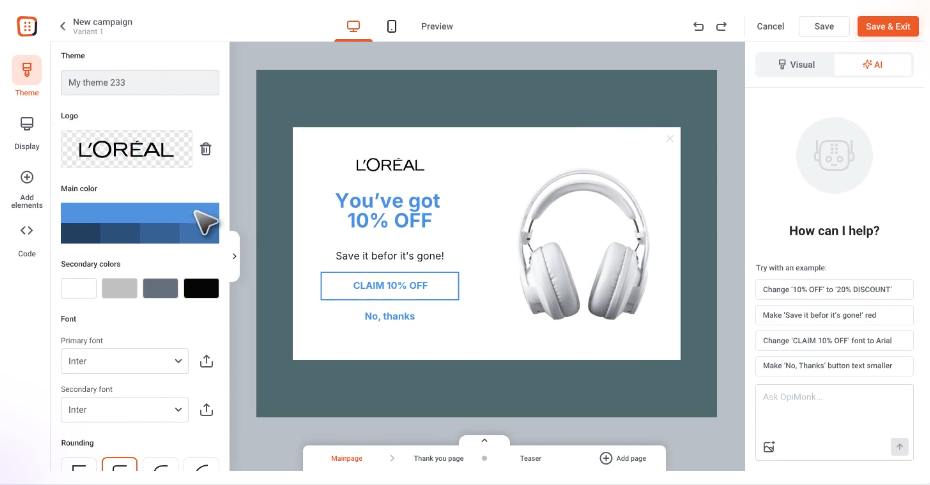
From there, I make changes just by describing what I want changed, and the personalization engine keeps swapping in whatever products are most likely to convert for whoever’s actually looking at the page. It’s the most “hands-off, still in control” AI experience I’ve used in this category. The one thing to watch is the free plan’s 10,000 pageview cap, which fast-growing stores can outgrow within a month or two.
Pros:
- AI Wizard builds a full, branded campaign plan from just a URL and a goal
- Conversational AI editing instead of manual campaign rebuilding
- Real-time personalized product recommendations per visitor
- Automatic frequency management to prevent popup fatigue
- Revenue-attributed A/B testing, not just click counts
Cons:
- Free plan’s 10,000 pageview cap is easy to outgrow for fast-scaling stores
- Personalization engine takes some setup time to configure against your catalog
User Rating: 4.9/5 (Capterra)
Pricing: Free plan available; paid plans from $29/month.
3. Justuno – Best for AI Product Recommendations With Large Catalogs
Justuno earns its spot on this list the moment a catalog gets too big for generic recommendations to still feel relevant. Its AI reads each visitor’s on-site behavior in real time and decides which specific products to surface in the popup, so two shoppers browsing the same page can see completely different offers.
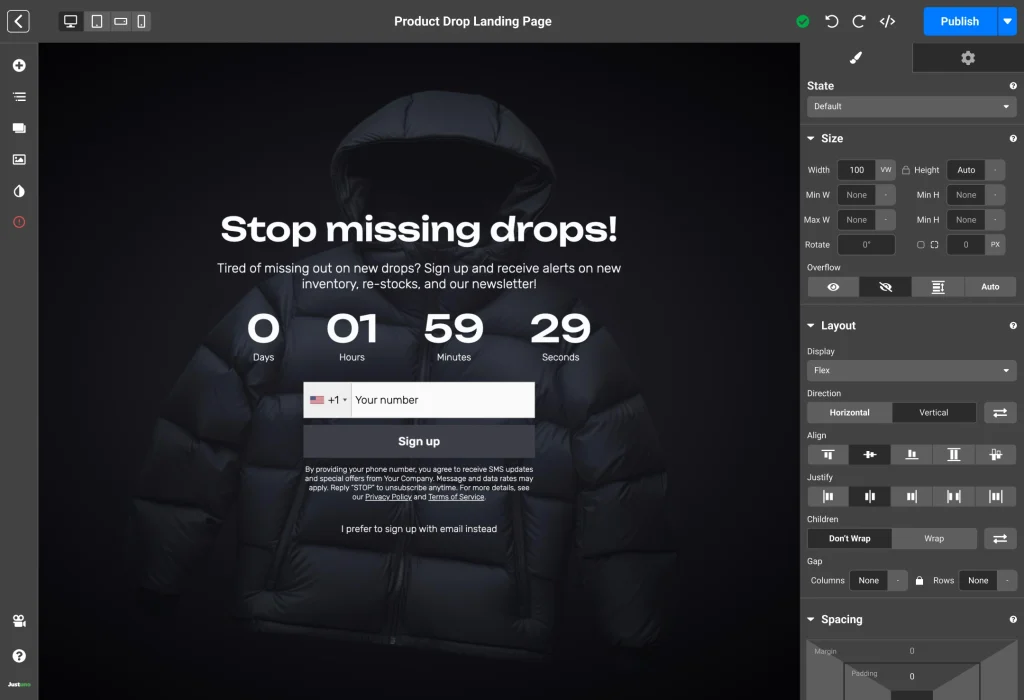
I’ve seen this genuinely move average order value for stores with wide or repeat-heavy catalogs. I won’t pretend it’s a five-minute setup, though. There’s a real learning curve before campaigns run at full effectiveness.
Pros:
- Session-based product matching instead of one-size-fits-all recommendations
- Deep behavioral, cart-value, and referral-source targeting
- Multivariate testing across design and messaging simultaneously
- Native integrations with Klaviyo, Mailchimp, and Shopify
Cons:
- Steeper learning curve than most tools on this list before campaigns run at full effectiveness
- No longer works on Shopify checkout pages as of August 2024
User Rating: 4.6/5 (Capterra)
Pricing: Free for up to 2,000 visitors/month; paid plans from $29/month.
4. OptinMonster – Best for AI Copywriting Across Any Site Type
OptinMonster is where I send anyone whose popup goal is lead generation across a whole site, not just a product page. Its Smart Optimizations feature is the AI part I actually use week to week: I select any text block, hit “improve with AI,” and get five rewritten variations built on real copywriting principles, ready to drop straight in.
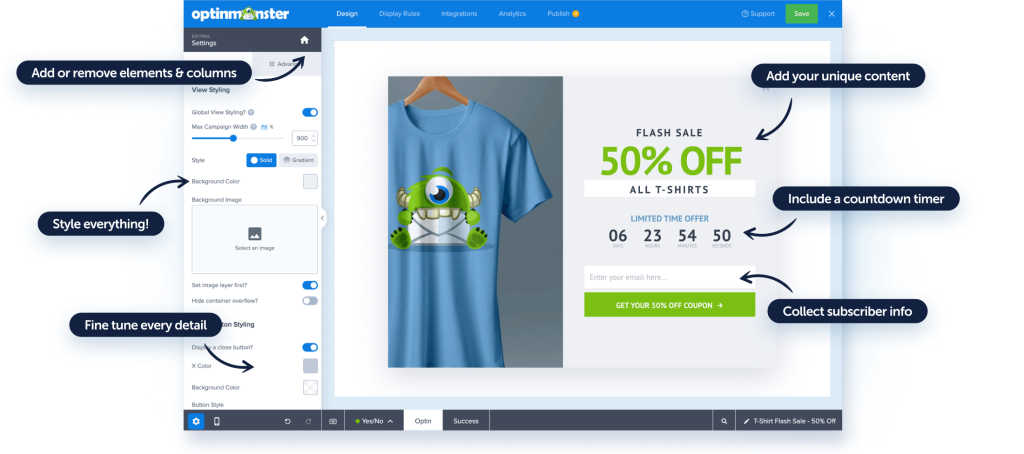
Pair that with exit-intent detection and page-level targeting, and it covers most of what a content or blog-heavy site needs. The paid TruLead add-on quietly filters out fake emails and bot signups before they ever touch your list, which has saved my deliverability more than once. There’s no free plan, so you’re committing budget before you’ve tested it on your own traffic.
Pros:
- Five AI-generated copy variations per text block, instantly
- Exit-intent detection tuned to cursor movement, not a flat timer
- TruLead AI lead filtering to keep bot signups off your list
- 700+ templates so you rarely start from a blank canvas
Cons:
- No free plan or trial before you commit budget
- TruLead AI lead filtering sits behind a paid add-on
User Rating: 4.2/5 (Capterra)
Pricing: From $19/month. No free plan.
5. Wisepops – Best for Predictive AI Cart Recovery
Wisepops is the tool I recommend when a team is done reacting to abandonment and wants to get ahead of it. Its AI doesn’t wait for the exit-intent cursor movement; it reads live browsing and cart behavior to predict a visitor is about to abandon and fires a recovery popup before they’ve actually started leaving.
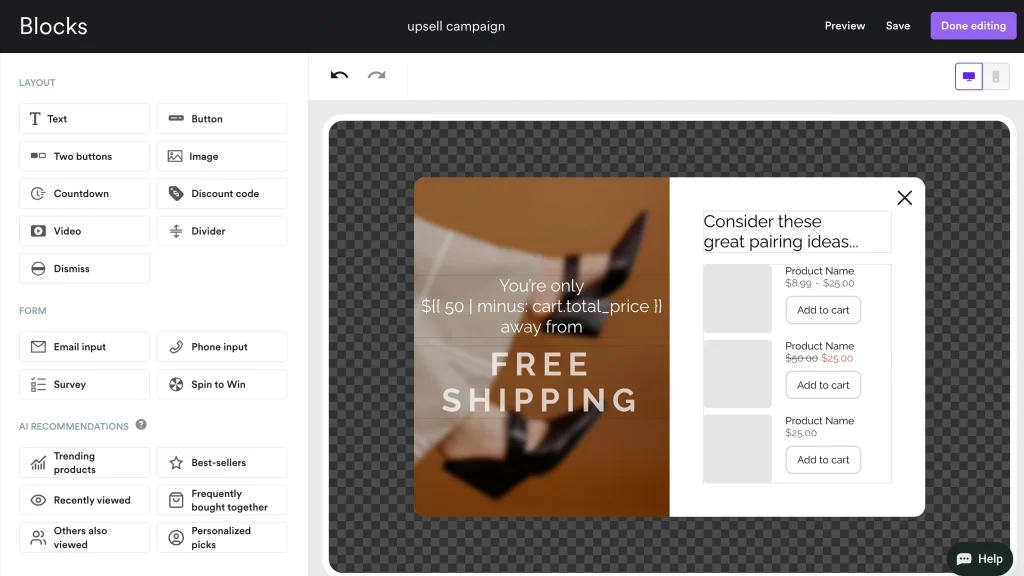
That predictive layer, plus scroll-depth and session-based segmentation, makes it one of the more sophisticated tools here. It’s also one of the pricier entry points on this list, so it tends to make the most sense once you have the traffic to justify it.
Pros:
- Early abandonment detection instead of last-second exit-intent
- Real-time segmentation using scroll depth and session activity
- A/B testing with control groups to measure true incremental lift
- Multiple formats: banners, slide-ins, full-screen overlays, embedded units
Cons:
- Pricier entry point than most alternatives on this list
- Pageview-based pricing can scale faster than expected for high-repeat-traffic sites
User Rating: 4.9/5 (Capterra)
Pricing: From $49/month.
6. Popupsmart – Best for Prompt-to-Popup AI Creation on a Budget
Popupsmart is my go-to recommendation for anyone who wants real AI without an enterprise price tag attached. I type a plain-language prompt like “collect emails with a 10% discount on exit intent,” and its AI Popup Builder generates the whole thing: layout, copy, and targeting rules, ready to publish.
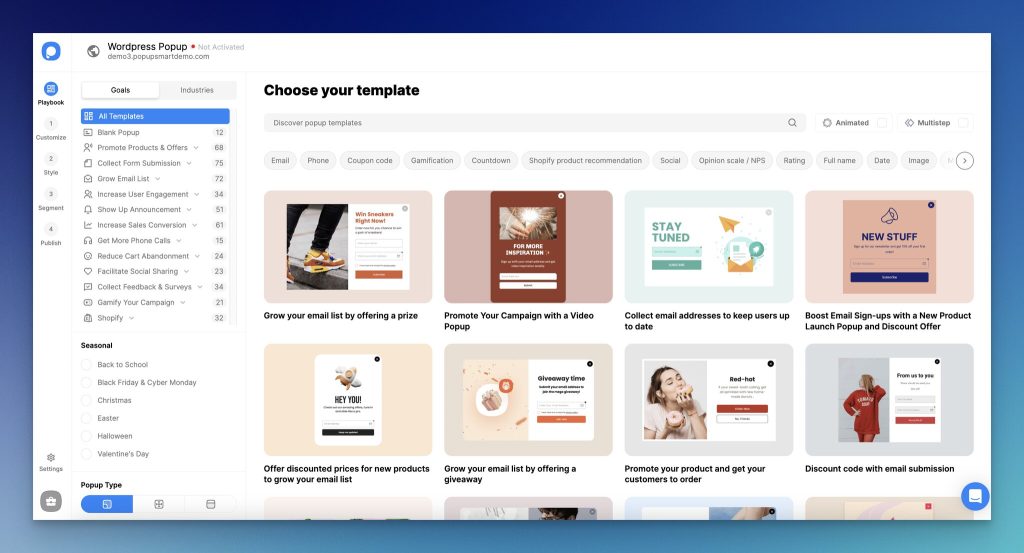
Smart Mode targeting then keeps optimizing who sees it and when, without me touching a segmentation rule. It’s lightweight on page speed too, which matters more than people admit until Core Web Vitals start dropping. Just know that A/B testing and deeper analytics sit behind the higher-priced Advanced plan.
Pros:
- Full campaign generation from a single plain-language prompt
- Smart Mode auto-optimization of audience and timing
- 500+ templates across ecommerce, SaaS, and content use cases
- Lightweight script that doesn’t drag down site speed
Cons:
- A/B testing is gated behind the $57.50/month Advanced plan
- Analytics are more basic than OptiMonk or Wisepops
User Rating: 4.5/5 (Capterra)
Pricing: Free plan (5,000 pageviews, 1 popup, 1 website); paid plans from $39/month.
7. Klaviyo – Best for AI-Optimized Form Timing Inside Your Existing ESP
Klaviyo is usually already in a marketer’s stack for email, so it earns a spot here because its native popup builder now has real AI behind timing. If your account has at least 400,000 profiles, Klaviyo’s form optimization tests different timing variations against your current setup and automatically promotes the winner once it has enough data.
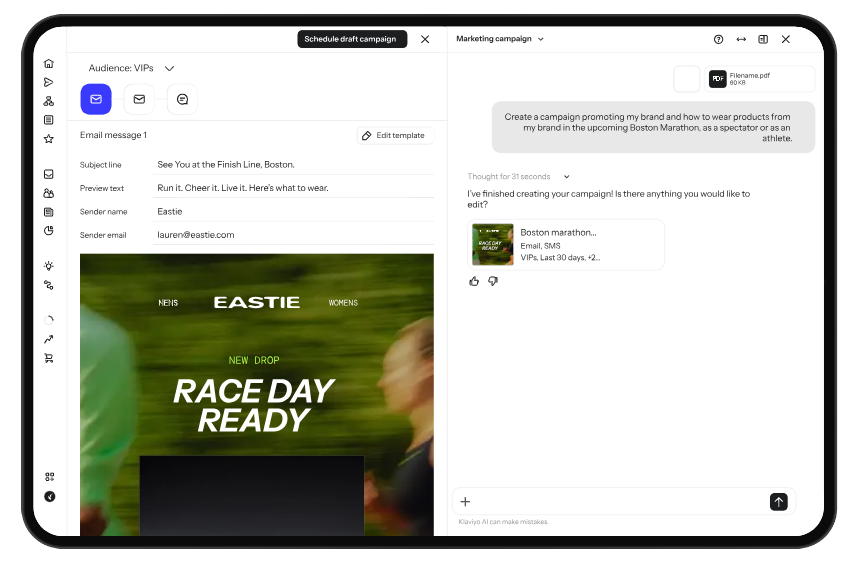
Outside of that, its AI stops there. There’s no AI-driven product recommendation, no cart-recovery AI, and design flexibility is limited to five basic formats. I’d treat it as a starting point, not an endpoint, once your popup strategy gets more ambitious.
Pros:
- Native sign-up forms already synced to your existing email flows
- AI timing tests that replace manual guesswork on display delay
- Zero extra tool cost if you’re already paying for Klaviyo email
- Simple starting point before you need anything more advanced
Cons:
- No AI product recommendations or cart-recovery AI
- Design flexibility limited to five basic form formats
- AI timing optimization requires at least 400,000 profiles to activate
User Rating: 4.6/5 (Capterra)
Pricing: Free up to 250 contacts; paid plans from $20/month.
8. Alia – Best for AI Personalization Built on Klaviyo Segment Data
Alia is the one I’d point to if the goal is turning a signup into a brand experience instead of a bare discount ask. Its Prism AI feature reads Klaviyo segment membership, first-party cookies, and session data together to adapt what a popup shows in real time, and it’s built around education-first flows: telling a visitor why a product is different before ever asking for their email.
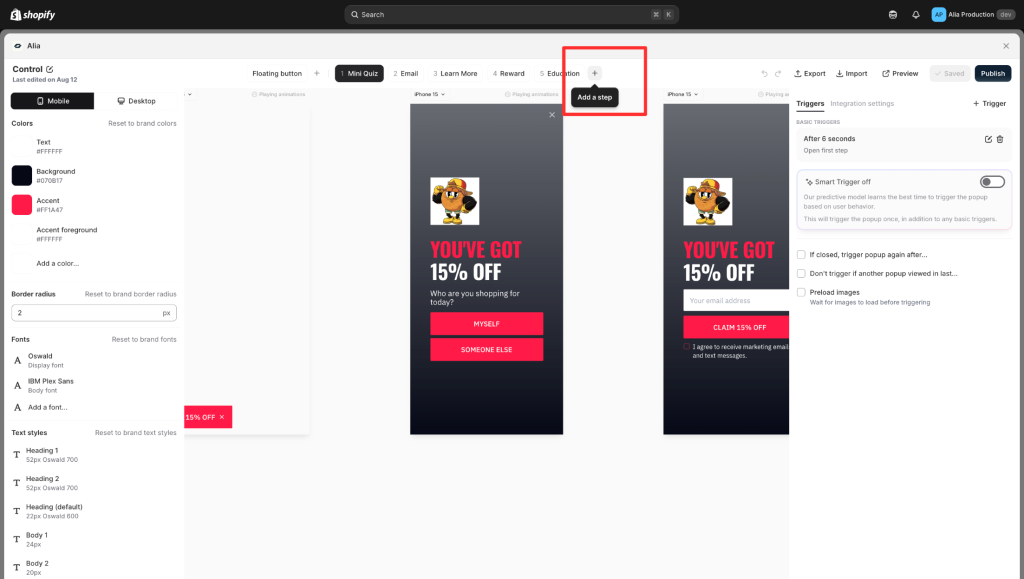
That storytelling-over-interruption approach is why it’s been quoted at 15 to 35% opt-in rates against Klaviyo’s native 5 to 6%. It’s Shopify-native and built specifically around Klaviyo as your ESP, so it makes less sense if you’re running a different platform.
Pros:
- Multi-signal targeting instead of relying on one data point
- Automatic suppression of existing subscribers from acquisition offers
- Education-first flows that build purchase intent before the ask
- Zero-party data written straight back into Klaviyo profiles
Cons:
- Built specifically for Shopify and Klaviyo, less useful outside that stack
- Newer to third-party review platforms, so independent review volume is thinner than more established tools
Pricing: Custom, traffic-based pricing.
9. Sleeknote – Best for Live Personalization and Gamified Popups
Sleeknote wins me over on design polish more than raw AI horsepower, but its SiteData engine deserves a mention because it pulls live store variables to personalize in ways that feel automatic even without an “AI” label front and center.
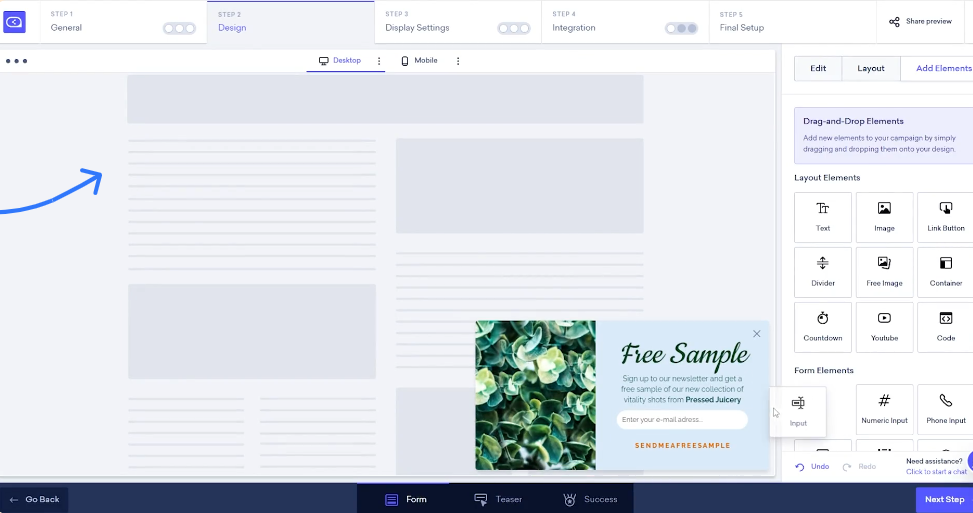
I’ve used it to show a free-shipping bar that calculates the exact gap to a customer’s threshold, and to trigger product-specific cross-sells based on live cart contents, all without custom code.
Its gamified formats, like Spin-to-Win and Scratch-to-Win, have pushed some stores past 40% conversion rates, which is hard to ignore. There’s no free plan, and pricing is visitor-based rather than pageview-based, which is friendlier for repeat traffic but still a real monthly commitment.
Pros:
- Real-time personalization pulled directly from store data, no manual setup
- Gamified formats that meaningfully outperform plain signup forms
- Clean, brand-first design that doesn’t feel like a generic popup
- Visitor-based pricing is kinder to stores with a lot of repeat traffic
Cons:
- No free plan; only a 14-day free trial
- Pricing climbs at the enterprise tier for high-traffic sites
User Rating: 4.8/5 (Capterra)
Pricing: From around $49–55/month, billed annually.
10. Privy – Best for Small Shopify Stores Wanting Popups, Email, and SMS in One Tool
Privy is the tool I recommend to a small Shopify store just getting its first popup and email program off the ground. It doesn’t lean hard into AI branding, but its behavior-based targeting (exit intent, cart value, time on page, device) covers the fundamentals well, and everything flows directly into its own email and SMS tools without needing a separate ESP.
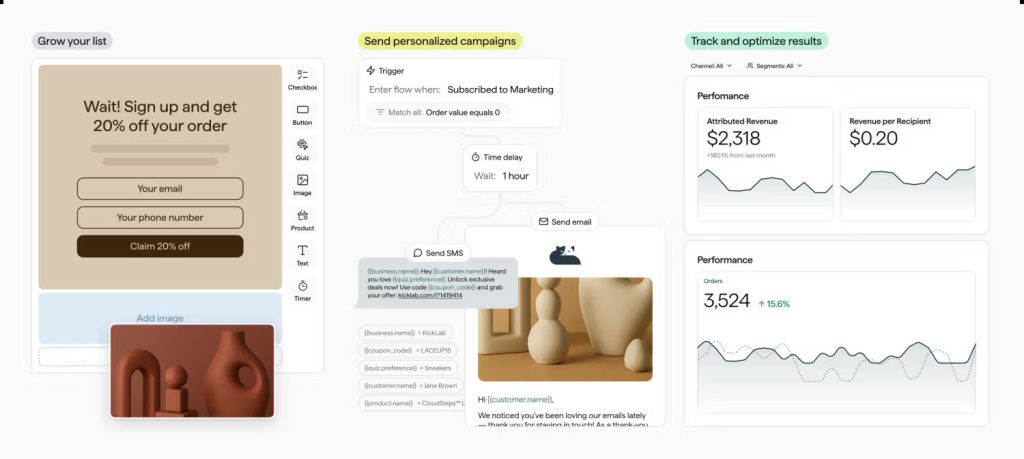
It’s genuinely easy to set up in an afternoon. Just know that as you scale past a basic list-and-recover setup, you’ll likely outgrow its lighter targeting and reporting compared to dedicated AI-first platforms like OptiMonk or Wisepops.
Pros:
- One tool for popups, email, and SMS instead of three subscriptions
- Fast, no-code setup a small team can launch same-day
- Solid exit-intent and cart-value targeting out of the box
- Genuinely usable free plan to test before committing
Cons:
- Lighter on AI personalization compared to dedicated e-commerce popup platforms
- Reporting depth is more basic than OptiMonk, Wisepops, or Justuno
User Rating: 4.4/5 (Capterra)
Pricing: Free plan available; paid plans from $24/month.
How I Chose These AI Popup Tools
Picking tools for a list like this is not something I take lightly. I followed a systematic approach to make sure every recommendation is fair, grounded, and actually useful for someone making a real purchasing decision.
- User Reviews and Ratings: I started with verified feedback on G2 and Capterra, looking for patterns across reviews rather than isolated opinions. If multiple users flagged the same limitation or praised the same feature consistently, that shaped the assessment.
- Essential Features and Functionality: I focused on what actually drives conversion performance: trigger types, targeting depth, template quality, mobile support, and whether the AI delivers on the use case it claims to handle. A tool that lists “AI-powered” on its homepage but only rewrites a headline once did not rank as high, regardless of interface polish.
- Ease of Use: If launching your first AI-generated campaign takes more than 30 minutes, that friction compounds every time you create or adjust a campaign. Tools with clear campaign flows and minimal technical requirements naturally ranked higher. Non-technical marketers should be able to operate the tool independently.
- Customer Support: Plugin conflicts, caching issues, and integration failures are common across popup tools. I looked at support availability, response times cited in reviews, and how well teams assist during setup and troubleshooting, not just after problems arise.
- Value for Money: I evaluated value based on what you realistically get at the pricing tier most businesses would actually use, not just the cheapest entry plan. Free plans and trials were assessed on how useful they are before the upgrade pressure kicks in.
- Personal Experience and Expert Opinions: I factored in firsthand observations and patterns from marketers running real conversion campaigns. If a tool’s AI consistently created friction or consistently impressed experienced users, that showed up in the final ranking.
My Top 3 AI Popup Tool Picks
Choosing the wrong popup tool usually doesn’t blow up your site. It just quietly underperforms for months while you assume the offer, not the targeting, is the problem. These three stand out because their AI does real work, not just a demo-day trick.
1. Picreel
Picreel is my go-to when I want AI handling the busywork of building, styling, and reporting on a popup, not just targeting it. Going from a plain-language goal to a fully branded, live campaign in minutes is the single biggest time-saver on this list.
2. OptiMonk
OptiMonk is the deepest AI implementation for e-commerce specifically. The AI Wizard doesn’t just suggest a template; it builds a reasoned campaign plan from your actual site, and the personalization engine keeps optimizing after launch.
3. Wisepops
Wisepops is the pick when your problem isn’t creation speed, it’s abandonment. Predictive cart recovery that fires before a visitor actually leaves is a genuinely different capability than standard exit-intent, and it shows up directly in recovered revenue.
FREE. All Features. FOREVER!
Try our Forever FREE account with all premium features!
When Should You Move to an AI Popup Tool?
This is the question I get most from marketers still running a basic, static popup plugin. The honest answer: sooner than you think. A flat “subscribe now” box is fine for a brand-new site with almost no traffic. It stops working the moment you have enough visitors that one generic offer can’t possibly fit all of them.
Here are the clear signals it’s time to switch:
- You’re showing the same offer to every visitor regardless of what page they’re on
- You’ve never tested more than one headline because writing variations takes too long
- Your exit-intent popup fires the same way for a first-time visitor and a returning customer
- You have no visibility into which popup actually drove a sale versus just an impression
- Your list is filling up with bounced or fake emails, and nobody’s filtering them out
- You’re manually building a new campaign every time you want to test a different offer
If three or more of these sound familiar, a static popup plugin is already costing you more in missed conversions than an AI tool would cost in subscription fees.
How Do AI Popup Tools Work Across Different Business Types?
One thing that rarely gets addressed in popup tool roundups is that “AI popup tool” means something different depending on what kind of business is running it. An e-commerce store, a SaaS company, and a content site are not solving the same problem.
| Business Type | How They Use AI Popups | What They Need in a Tool |
| E-commerce Stores | Product recommendations, cart recovery, and discount timing | AI personalization, predictive cart recovery, Shopify-native integration |
| SaaS Companies | Lead capture, trial signups, and feature announcements | AI copywriting, page-level targeting, CRM integration |
| Agencies | Managing multiple client sites and campaigns from one account | Multi-domain support, white-label reporting, fast AI-assisted setup |
| Content Sites / Publishers | Newsletter growth, content-locker signups | AI copy variations, exit-intent, lightweight script with minimal speed impact |
| Small Shopify Stores | Simple list growth without a big marketing team | No-code setup, bundled email/SMS, genuinely usable free plan |
Choose the AI Popup Tool That Fits How You Actually Work
The best AI popup tool isn’t the one with the longest feature list on its homepage. It’s the one whose AI automates the exact bottleneck you actually have, whether that’s slow campaign creation, generic targeting, missed cart recovery, or a messy lead list, and fits the stack you already run.
If I had to give you one decision filter: pick the tool that will actually get used every week by whoever’s running your popup campaigns, not the one that looks most impressive in a demo. Adoption beats feature count every time.
For marketers who want AI doing the heavy lifting on design, personalization, and reporting without extra tools bolted on, that’s exactly what Picreel is built for. Start capturing the leads you’re currently losing, free.
Frequently Asked Questions
What is the difference between an AI popup tool and a regular popup plugin?
A regular popup plugin shows the same static popup based on a fixed rule, like a five-second timer. An AI popup tool actively builds, personalizes, or times popups using machine learning, adapting the offer, copy, or moment shown to each individual visitor's behavior rather than applying one rule to everyone.
Do AI popups slow down my website?
Not if the tool is built with a lightweight script. Heavier, template-bloated popup builders can affect load time, so check the tool's impact on Core Web Vitals before committing, especially if search rankings matter to your team.
Can I use an AI popup tool without a developer?
Yes. Most tools on this list, including Picreel, are built for no-code setup. If a tool requires custom CSS or scripting just to launch a basic campaign, that's a sign to look elsewhere.
Do AI popup tools need a large traffic volume to work well?
AI-driven personalization and A/B testing need enough visitors to reach statistical significance, generally in the tens of thousands of monthly sessions. Smaller sites can still benefit from AI-assisted creation and copywriting even without that traffic volume.
Are AI popups compliant with privacy regulations like GDPR?
The popup tool itself isn't automatically compliant; compliance depends on how you configure consent, cookie behavior, and data storage. Check whether your chosen tool supports consent-based triggering before launching in regulated markets.
How long does it take to see results from an AI popup tool?
Most teams see a measurable lift within the first few weeks, since AI-assisted copy and targeting start working from the first campaign. Deeper personalization and predictive features, like cart-recovery timing, need several weeks of visitor data before they're fully optimized.
What is the ROI of switching to an AI popup tool?
ROI comes from higher conversion rates on the same traffic, less time spent manually writing and testing copy, and cleaner lead lists that improve email deliverability. For most growing sites, the subscription cost is offset within the first month or two by the additional leads or sales the personalization drives.
FREE. All Features. FOREVER!
Try our Forever FREE account with all premium features!

 We'd love your feedback!
What did you like & how can we make it even better?
 Thanks for your feedback!
 Ask Your Question
Have a question? Get expert help to make your decision easier.